
Live at The Tuning Fork
26 August 2026
Live Review by Music Journalist: Paul Marshall
More Than a Concert: Play It Strange Celebrates the Future of Aotearoa Music.
There are concerts where you go to be entertained, and then there are concerts where you leave feeling that you have witnessed something that matters.
Tonight at Auckland’s Tuning Fork was very much the latter.
On paper, Play It Strange Live was billed as an intimate acoustic fundraiser, bringing together Paige, Nat Hutton of There’s A Tuesday and Play It Strange alumni Rebel Reid, Lily Stiven, Salem Māhia, Cameron Beattie and, added to the lineup, four-time finalist Nikau Grace.
But this was never simply another night of singer-songwriters taking turns with an acoustic guitar.
This was a celebration of what happens when somebody gives a young songwriter a microphone, a stage and, perhaps most importantly, somebody who believes in them.
For more than two decades, Play It Strange has been doing precisely that. Since its foundation in 2003, more than 8,000 original songs have been entered into its competitions, with more than 1,500 young songwriters given professional recording opportunities.
The organisation's alumni list reads like a who's-who of Aotearoa's songwriting future, Kimbra, Liz Stokes of The Beths, Georgia Nott of Broods, Louis Baker, CHAII and others all passed through the Play It Strange ecosystem.
And that is why tonight mattered.
The 2026 Waiata Māori Competition received no dedicated funding, leaving Play It Strange needing to raise $10,000 to cover judging, mentoring and recording opportunities.
So, tonight, the music had a purpose.
And bloody hell, did these artists deliver.
Cameron Beattie
Opening the night was Cameron Beattie, a young songwriter who possesses that increasingly rare quality in modern music, the ability to make you believe he actually means every word he sings.
There is a confidence developing here, but it isn't arrogance. It's the confidence of somebody beginning to realise that songwriting can become a language of its own.
Cameron has already established himself within Play It Strange, having won the 2026 Peace Project with The Sun On The Hill.
But it was another song that would prove one of the night's unexpected highlights. More on that later.
Salem Māhia
Salem Māhia followed, his acoustic songwriting carries a sense of space and intimacy, allowing the songs to breathe rather than forcing them into submission.
His final song, Big Brother, was particularly affecting, revealing itself to be a deeply personal piece about his father.
There was emotion here without melodrama.
His voice moved effortlessly through a wide range, reaching some impressive high notes while retaining the vulnerability that made the songs work.
This is exactly the sort of young artist Play It Strange exists to encourage, somebody still finding their artistic identity while already possessing something worth saying.
Lily Stiven
Then came Lily Stiven, another Play It Strange success story who perhaps summed up the organisation's impact better than anybody could.
“Play It Strange made my career and now I work with them,” she told the audience.
And there it was.
The entire reason for tonight.
A young songwriter walks through the door as a participant and eventually comes back through the same door as somebody helping the next generation.
Her song High And Dry was a standout, but it was her voice that really grabbed the room.
Dark, husky and wonderfully textured, Stiven possesses one of those voices that can sound simultaneously sultry, warm and slightly dangerous.
Nat Hutton
Nat Hutton brought another shade to the evening.
Hutton started with Christchurch indie outfit There's A Tuesday, she has already travelled a considerable distance from the band's beginnings. There's A Tuesday won the solo/duo division of Smokefree Rockquest in 2019, with their debut single Piñata Head subsequently reaching No. 13 on the New Zealand singles chart.
The band have since shared stages with artists including BENEE, Conan Gray, Julia Jacklin, Spacey Jane and The Beths, while their 2025 album Blush helped establish them as one of Aotearoa's most interesting young indie acts.
Tonight, though, it was Hutton stripped back.
One song centred on the experience of watching friends disappear overseas.
“All my friends have moved to Melbourne or Sydney or London, so it's made for really expensive coffee catch-ups,” she joked.
It's funny because it's true.
Beneath the humour was a melancholy that ran through her songs, serious without becoming self-important, vulnerable without ever becoming indulgent.
This was songwriting about growing older and watching your world change around you.
Rebel Reid
Then came Rebel Reid.
And tonight, her performance carried an emotional weight nobody could have anticipated.
Reid began by honouring Dolly Parton, who had died only the previous day at the age of 80.
Parton's death had already sent shockwaves around the musical world, but hearing her name spoken from a small Auckland stage, by an artist whose own musical journey is intertwined with Play It Strange, suddenly made the loss feel very close.
Reid's voice was magnificent.
There is a blues and soul quality to it that seems to come from somewhere deep in the Mississippi rather than Auckland.
Her second song, Promised Land, came with an ambition that says much about where this artist wants to go next.
“When things calm down I want to record my album at Sun Records,” she announced.
Dream big.
Why the hell not?
Reid then delivered the evening's most communal moment, bringing the night's performers back onto the stage for a version of Dolly's 9 to 5.
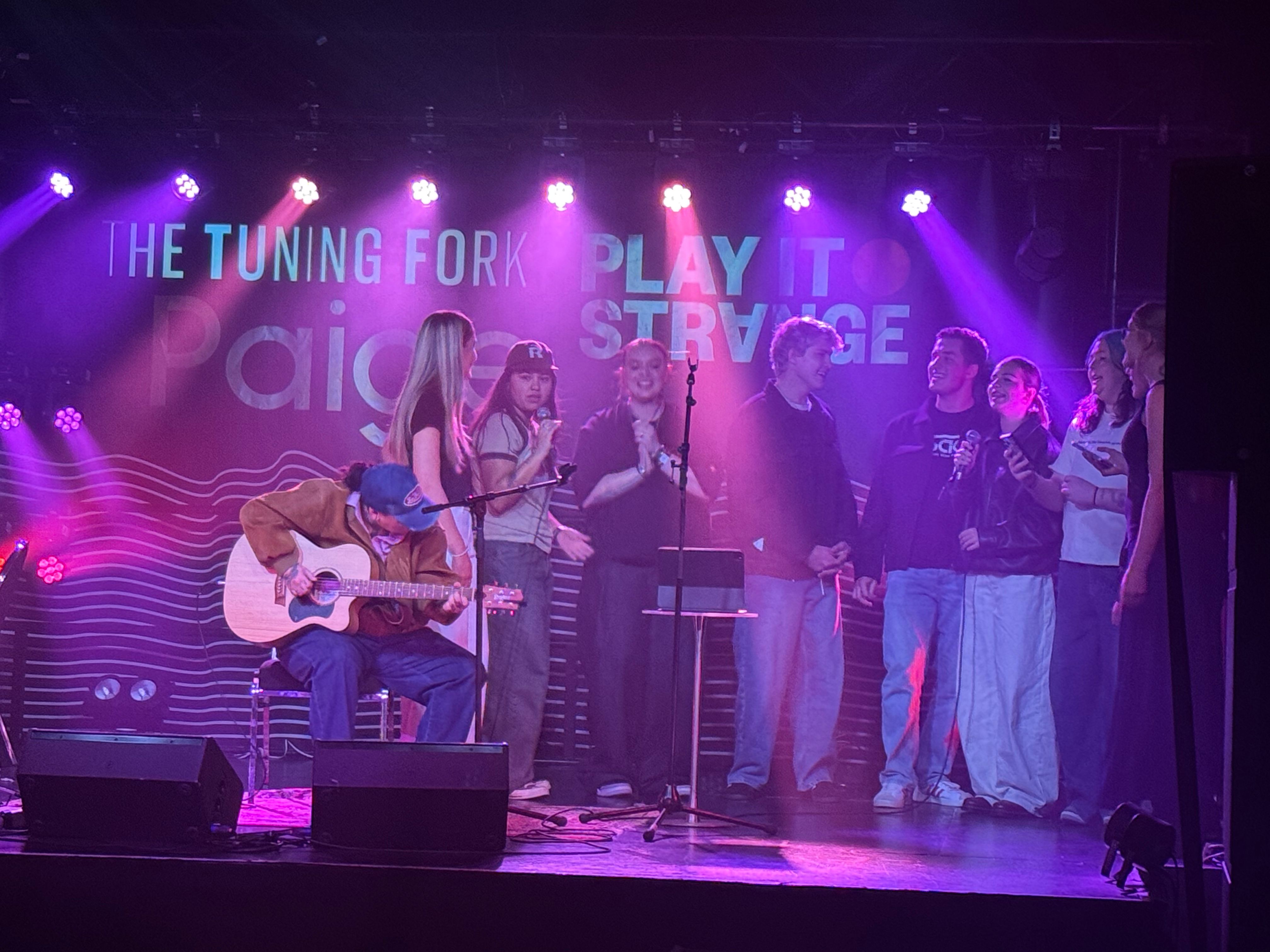
And suddenly this fundraiser became a celebration of Dolly Parton's extraordinary songwriting legacy, one songwriter inspiring another, who inspires another, who inspires another.
That is how music survives.
Not through monuments.
Through people.
Cameron Beattie — Round Two
Cameron returned to the stage for Don't Take My Cat, and if anything, the second appearance proved even more effective.
This time the audience almost knew what was coming.
They joined in.
The song became a communal joke, a singalong and an exercise in audience manipulation, the good kind.
Cameron has clearly figured out something that many musicians spend years learning:
If you can make an audience participate, they're yours.
By the end, the applause was rapturous.
Paige
Then came Paige.
And from the opening note of The Way You Are, it was obvious why she has become one of Aotearoa's most successful singer-songwriters.
Her voice was warmed up and ready to go from the first note.
No easing into the set.
No waiting for the confidence to arrive.
She arrived with it.
Her tone is rich and assured, and The Way You Are is a strong song performed with the sort of confidence that comes from somebody who knows exactly where she wants to take it.
At one point she stopped mid-song to acknowledge the people sitting on the floor at the front.
She said it reminded her of primary school.
The room laughed.
It's a small moment, but those are often the moments that make a live performance memorable.
Then came a song built around the hook:
“I wanna make it in LA.”
It's a great song, full of feel and ambition, and it sits comfortably within the musical world Paige has built.
Her career has already taken her well beyond the Play It Strange stage, from signing with Sony Music to performing internationally and sharing stages with artists including George Ezra and Holly Humberstone. She also performed in Auckland with the Jonas Brothers in 2024.
Her latest releases show an artist still evolving, with The Way You Are arriving in June 2026 and glued following in July.
But tonight, she wasn't here to prove anything.
She was here to give back.
Sienna Fitzgerald
Sienna Fitzgerald followed with a performance that carried echoes of early Jodie Mitchell.
There was a nervousness about her, and she made no attempt to disguise it.
But nervous doesn't mean incapable.
In fact, sometimes you can see the artist growing in front of you.
Fitzgerald delivered a steady set and, despite the nerves, did very well.
There is clearly something here.
And perhaps that's another reason nights like this matter.
The finished artist isn't always the most exciting thing to watch.
Sometimes it's the artist becoming one.
Nikau Grace
Then came Nikau Grace.
And suddenly the acoustic evening expanded into something considerably larger.
Grace performed with a backing track, and while that might technically have moved away from the stripped-back aesthetic of the night, the production immediately elevated the performance.
The sound was exceptional.
But it was Grace's voice that owned the room.
Heavenly is an overused word when describing singers.
Tonight, it was appropriate.
Her opening song, dealing with identity, was particularly powerful, with a backing choir adding enormous depth.
Then came the high notes.
And I mean high.
The audience responded with yelps and cheers as Grace pushed her voice higher and higher, at one point sounding as though she was attempting to negotiate directly with the heavens.
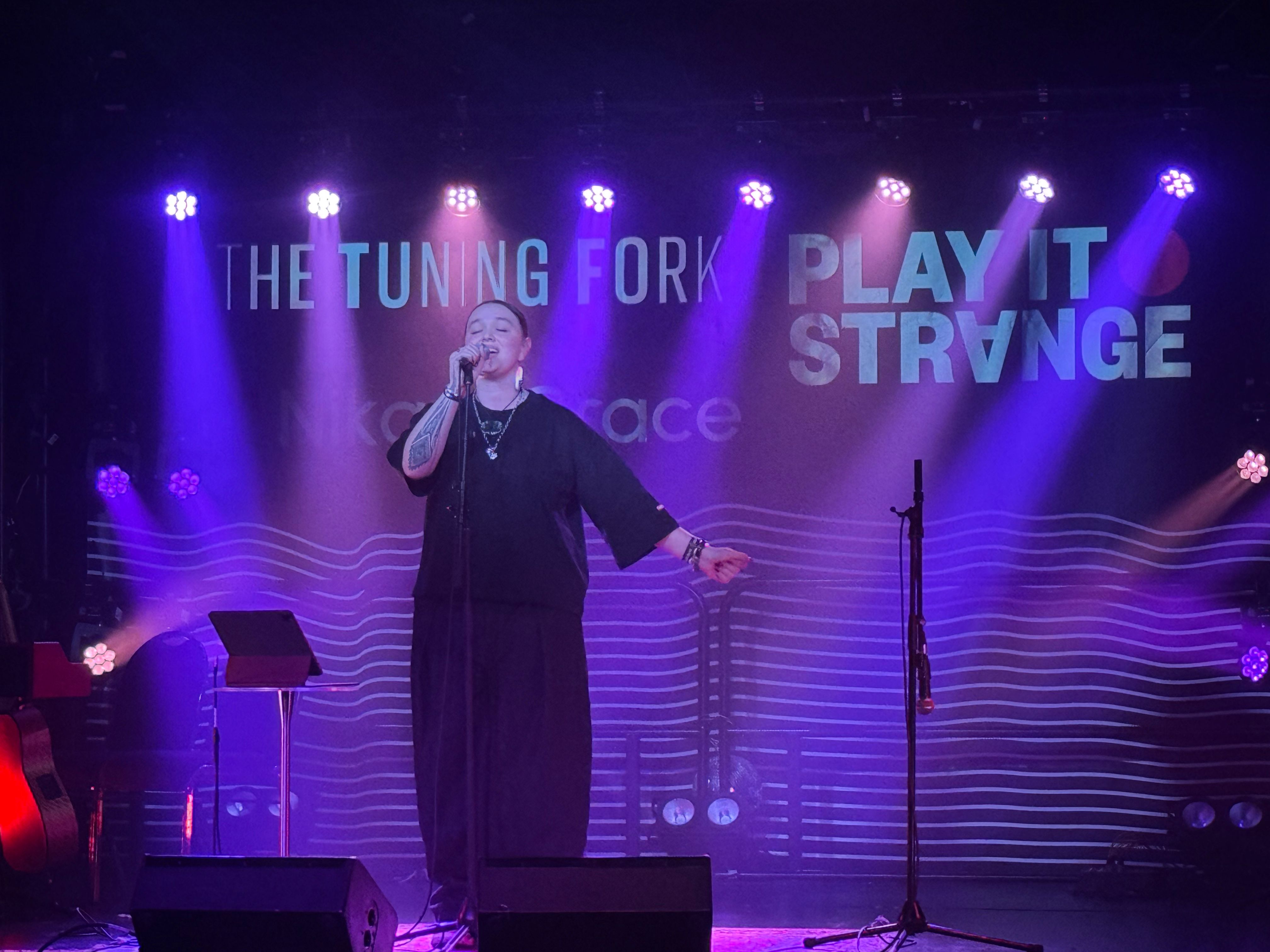
Four-time Play It Strange finalist Grace is precisely the kind of artist that makes the organisation's work so important.
Then came Rapua Te Mea Ngaro, anchored by the English hook Keep That Flame Alive, with every verse delivered entirely in te reo Māori.
It wasn't a token inclusion.
It felt natural.
It felt powerful.
It felt like exactly what the Waiata Māori Competition is designed to encourage, young people using music to express identity, culture and experience in their own voices.
Grace then made one of the evening's most profound observations.
“There’s no time to be petty or hurtful, so take a look around you and decide what you want out of life.”
Not bad advice from an 18-year-old.
In fact, it's pretty bloody wise.
And given the reason everybody was gathered in the room, it felt almost like a mission statement.
More Than A Concert
What made tonight special wasn't that every performance was flawless.
It wasn't supposed to be.
This wasn't a showcase designed to prove that every artist on stage had already arrived.
It was about showing what can happen when young people are given somewhere to start.
Play It Strange has spent more than 20 years creating that starting point. Its competitions encourage young people to write about identity, experience and the world around them, while the Waiata Māori Competition specifically encourages secondary-school students to bring te reo Māori into their original songwriting.
Tonight was therefore about more than raising $10,000.
It was about making sure the next Cameron, Salem, Lily, Rebel, Nikau, Sienna or Paige gets the chance to stand on a stage and discover what they can do.
And perhaps the most fitting moment of the evening came when Dolly Parton's spirit unexpectedly hovered over the room.
Parton spent a lifetime proving that songwriting could change lives.
Tonight, in a small Auckland venue, a room full of young and emerging Aotearoa artists demonstrated that the tradition is very much alive.
One generation hands the microphone to the next.
The song continues.
And if Play It Strange gets the support it deserves, there will be thousands more songs still to come.
This wasn't just a concert.
It was an investment in the next generation of Aotearoa songwriters.
Support Play It Strange
If you want to help Play It Strange reach its $10,000 target for the 2026 Waiata Māori Competition, donations can support the judging, mentoring and professional recording opportunities that help young Māori songwriters bring their music to life.
About the organisation and its history: Play It Strange — About Us
Listen to Play It Strange alumni and competition recordings: Play It Strange — Music
Play It Strange's 2026 Waiata Māori Competition: 2026 Waiata Māori Competition
Reviewer: Paul Marshall
Photography by Paul Marshall
WATCH THE LIVE VIDEO at Paul Was There -