
Going Global 2026: Where Aotearoa Meets the World
Day One at New Zealand’s most important music industry conference.
Review by Music Journalist: Paul Marshall
There are music conferences, and then there are music conferences where you realise, somewhere between the first coffee and the final panel, that you might actually be sitting in a room with someone who could change an artist’s career.
Going Global 2026 is one of those conferences.
Taking place in Auckland on August 27 and 28, Going Global brings international A&R executives, agents, promoters, festival programmers, managers, publishers and other music-industry players together with Aotearoa’s artists and industry. The daytime conference is based at Q Theatre, while the evening showcases spill across Whammy, Double Whammy and Triple Whammy on Karangahape Road.
And believe me, I know a thing or two about music conferences.
I've been around the block a few times: SXSW in Austin, Texas; BIGSOUND in Brisbane; Liverpool Sound City; All That Matters in Singapore; and MIDEM in Hong Kong. I've sat in rooms where the name on the door meant very little to most people in attendance but could mean everything to an artist trying to crack an international market.
My own band, Hangar 18, experienced exactly why these conferences matter. Connections made through the international music industry eventually helped lead to touring the Philippines with Silverchair and performing at the Unity Hand Over Festival in Hong Kong in front of 10,000 people in the stadium, with the performance simulcast around the world to 900 million.
That's the thing about conferences.
They aren't really about conferences.
They're about people.
You can sit through a hundred panels, collect a thousand contacts and drink enough bad conference coffee to keep a small village awake, but ultimately this business still comes down to relationships. You meet someone. You talk. You discover that you have something in common. You stay in touch. Six months later an email arrives. Then another. Suddenly the conversation that started beside a coffee machine becomes a tour, a publishing deal, a festival booking, a management relationship or an international release.
I've seen it happen.
I also attended the very first Liverpool Sound City conference, where I managed to secure personal meetings with Seymour Stein and Richard Gottehrer, the men behind Sire Records.
We're talking serious music-industry history here.
Sire was founded by Stein and Gottehrer and became synonymous with artists who changed the cultural landscape, including the Ramones, Talking Heads, Blondie and Madonna.
Stein's story alone could fill a book. He famously signed the Ramones after seeing them play and later became instrumental in bringing Talking Heads into the Sire family. And then there was Madonna, signed while Stein was recovering in hospital, a story that has become part of music-business mythology.
I got to hear those stories directly from the man himself.
That's why I take music conferences seriously.
And that's why Going Global matters.
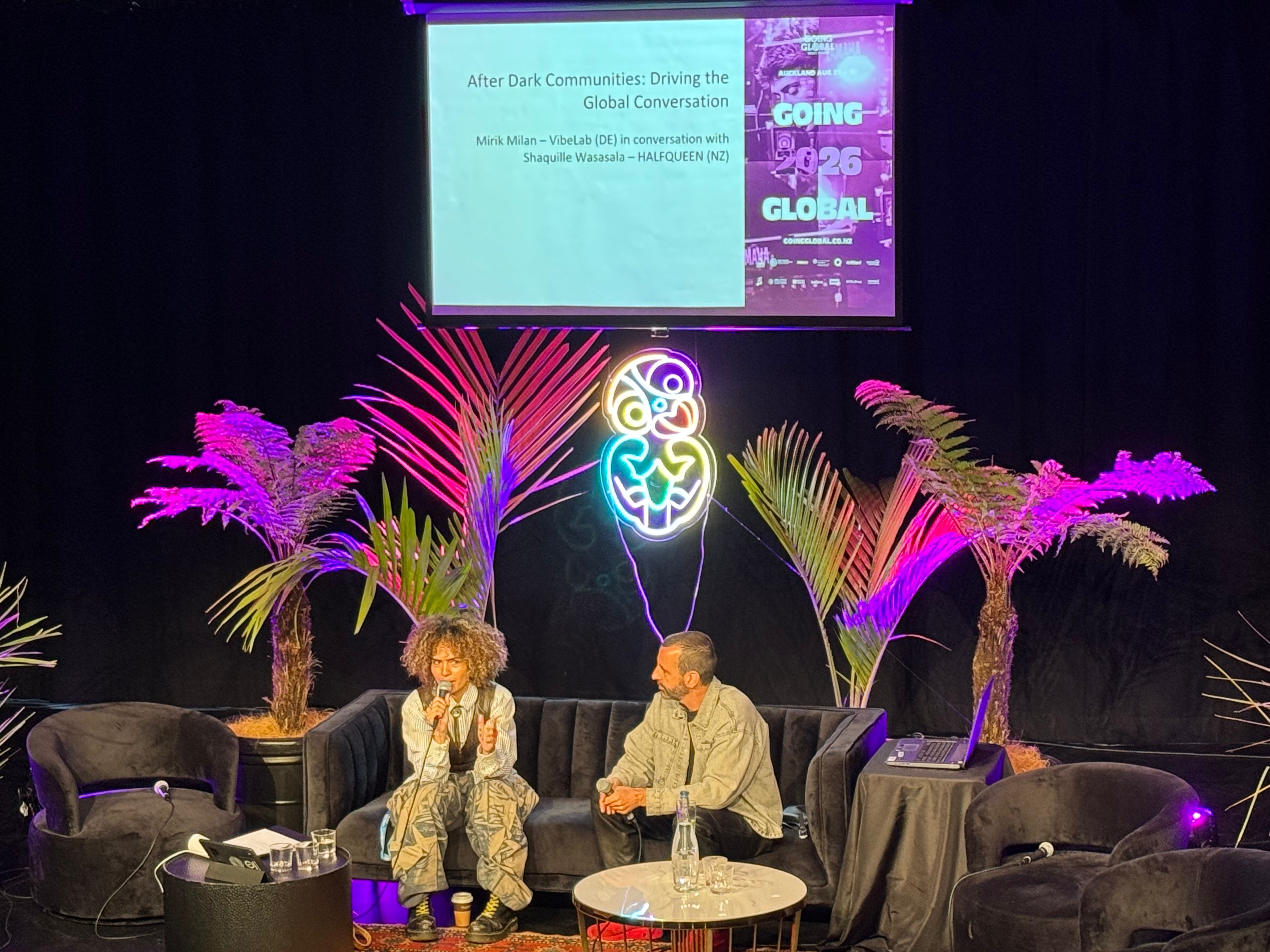
After Dark: Where the Nightlife Conversation Begins
The first session I attended was After Dark Communities: Driving the Global Conversation, presented by Mirik Milan from Germany in conversation with New Zealand DJ and artist Shaquille Wasasala, better known as Halfqueen.
The conversation quickly moved beyond simply talking about clubs.
It was about community.
Halfqueen reflected on growing up in New Zealand and discovering nightlife as something that largely existed after dark, sometimes in places that weren't exactly operating by the rule book. University life, the closing of night buses and the search for somewhere to go all became part of the story.
And that is where nightlife gets interesting.
A scene doesn't simply appear because someone opens a club. It develops because people need somewhere to gather. Music becomes the glue. Venues become meeting points. DJs become cultural curators. Communities form around sound, and eventually those communities become scenes.
Milan and Halfqueen explored the difficulties facing nightlife in both Auckland and Germany, examining how those scenes have developed and the challenges confronting them today.
It was a timely reminder that the music industry isn't just about records and stages.
Sometimes it's about the spaces between them.
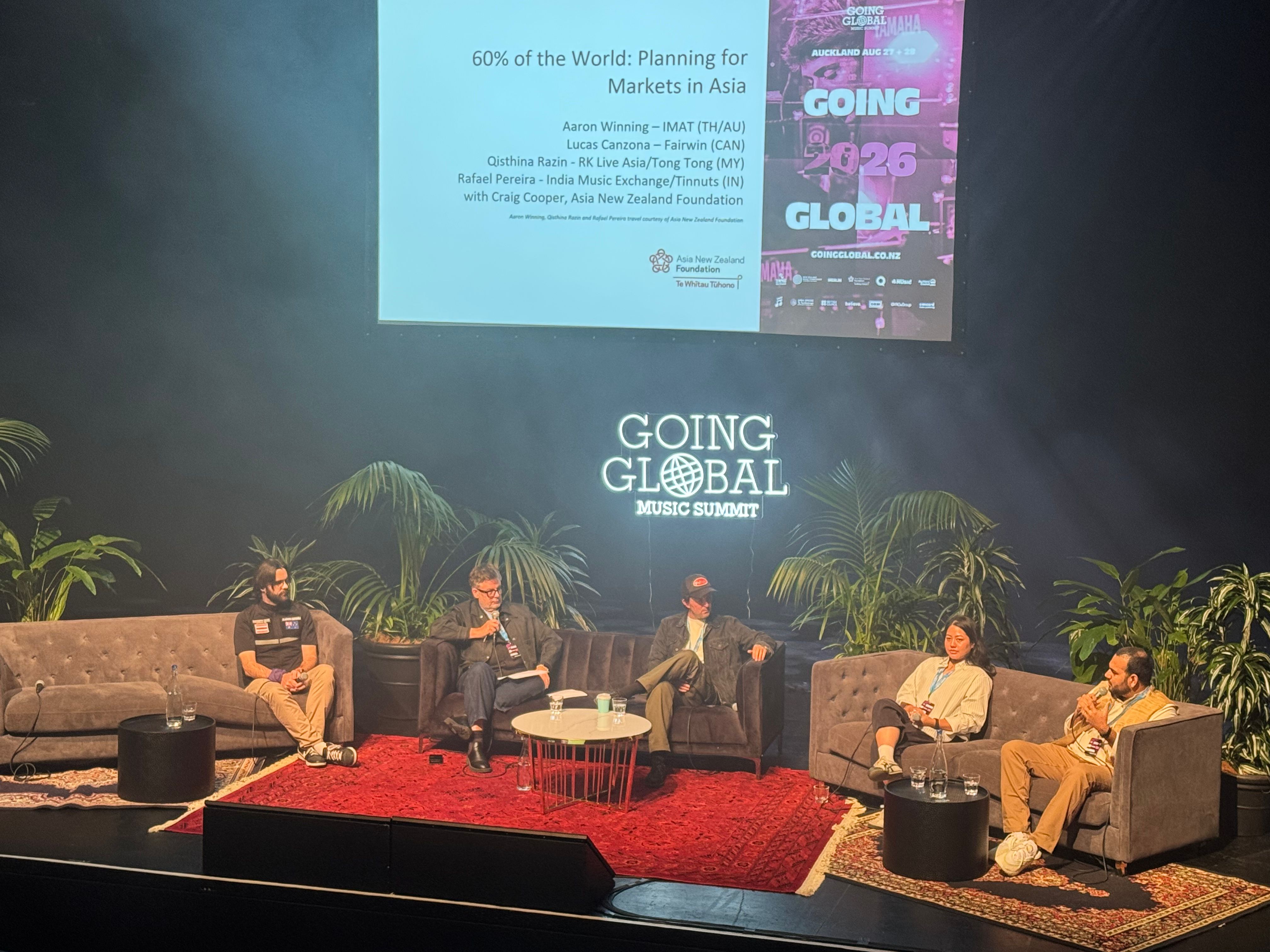
60% of the World Is Waiting
Next came 60% of the World: Planning for Markets in Asia, a panel featuring Aaron Winning, Lucas Canzona, Qisthina Razin, Rafael Pereira and Craig Cooper from the Asia New Zealand Foundation.
This was one of those sessions where the notebook comes out and stays out.
Asia isn't one market.
That's probably the first thing any New Zealand artist needs to understand.
Different countries have different audiences, different platforms, different cultural expectations, different business structures and completely different ideas about how artists should conduct themselves.
The panel explored the realities of touring in Asian territories, how artists can begin establishing themselves, which social platforms matter in different markets and, perhaps most importantly, how to behave when you arrive.
Because cultural awareness isn't optional.
One story particularly brought that home.
A panelist described an artist who had filmed a prank in Thailand involving a Thai coin glued to the pavement, capturing people attempting to pick it up.
Harmless prank?
Not necessarily.
In Thailand, the monarchy is protected by extremely serious laws, and the symbolism of the monarch's image appearing on a coin can make what looks like an innocent piece of internet content considerably more complicated.
The lesson wasn't simply don't do that.
The lesson was: know where you are.
What might be meaningless in one country can carry enormous cultural or legal significance in another.
For an emerging artist dreaming about international touring, that information could be worth considerably more than the price of the conference ticket.
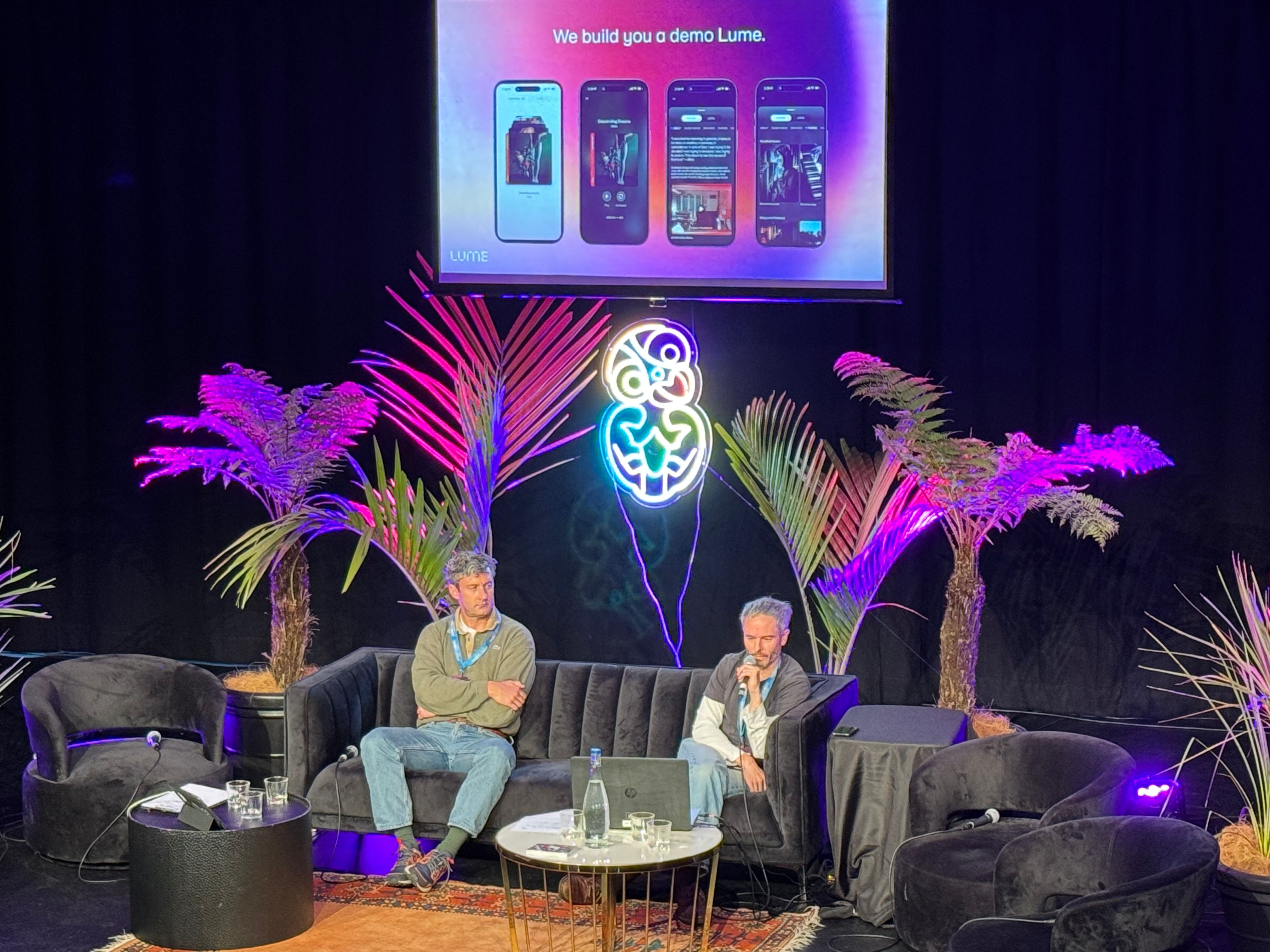
Lume: Building a New World Around the Album
Then came one of the more intriguing sessions of the day: Lume, the New Zealand company looking at what an album can become in the digital age.
And this is where things start getting particularly interesting.
Lume describes itself as “the world of an album”, creating a destination where an artist can bring together the wider creative universe surrounding a release rather than simply throwing another collection of streaming links at an audience.
Founded in Auckland by Duncan Greive, Tim Harper, Sacha Judd and Justin Warren, Lume brings together experience from digital media, technology, law, product development, labels and artist relations.
The concept is simple but potentially significant: music has increasingly become fragmented across streaming services, social media, video platforms and countless pieces of digital content. Lume is attempting to put some of that world back together.
And importantly, it isn't operating in some theoretical vacuum.
Lume's platform has already featured projects from artists including Georgia Lines and Fazerdaze, with Amelia Murray's Soft Power cited as a notable example of an album world being brought together through the platform.
For independent artists, that kind of thinking matters.
The album isn't necessarily dead.
Perhaps we've simply been presenting it badly.
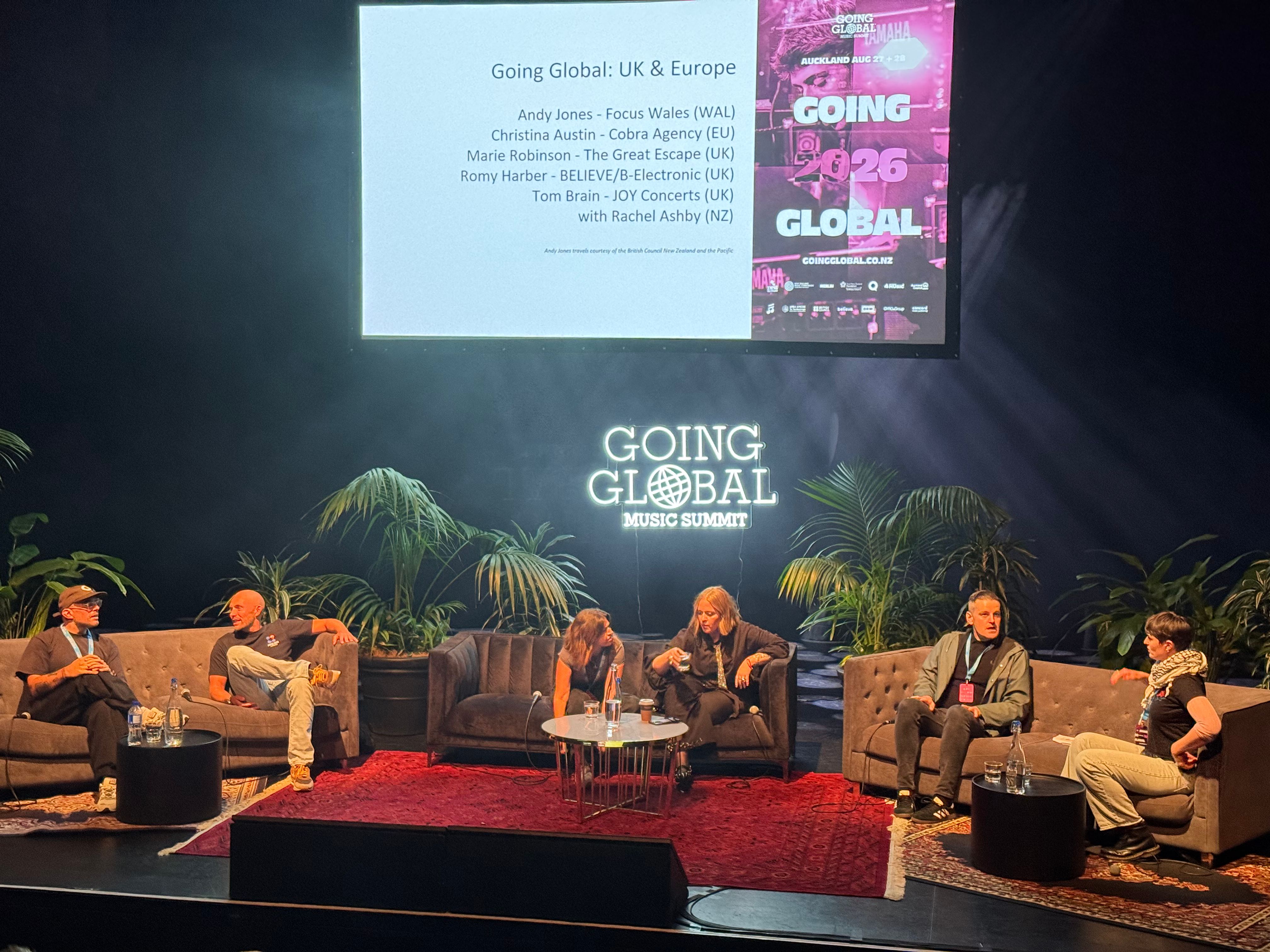
How Do You Break Europe?
The afternoon continued with Going Global: UK & Europe, featuring Andy Jones from Focus Wales, Christina Austin from Cobra Agency, Marie Robinson from The Great Escape, Romy Harber from Believe and Tom Brain from JOY Concerts, with Rachel Ashby representing New Zealand and asking the questions.
Once again, the value was in the detail.
There were stories about getting into markets, making connections and understanding the people on the other side of the desk.
One of my favourite pieces of advice came from a panelist discussing the art of making friends backstage.
The weapon of choice?
Cigarettes and a lighter.
More specifically, rolling tobacco.
The logic is wonderfully simple: if you hand somebody a cigarette, you have given them something to do. If you're rolling one for them, you've bought yourself several minutes of conversation.
In a business where an artist might get 30 seconds of someone's attention, several minutes can be an eternity.
Call it networking.
Call it psychological warfare.
Call it simply being human.
Whatever you call it, it works because music remains a people business.
And there was another wonderfully honest observation: even the people behind the scenes have egos.
Agents, promoters, managers, executives, they're human too.
Understanding that isn't manipulation. It's understanding the room.
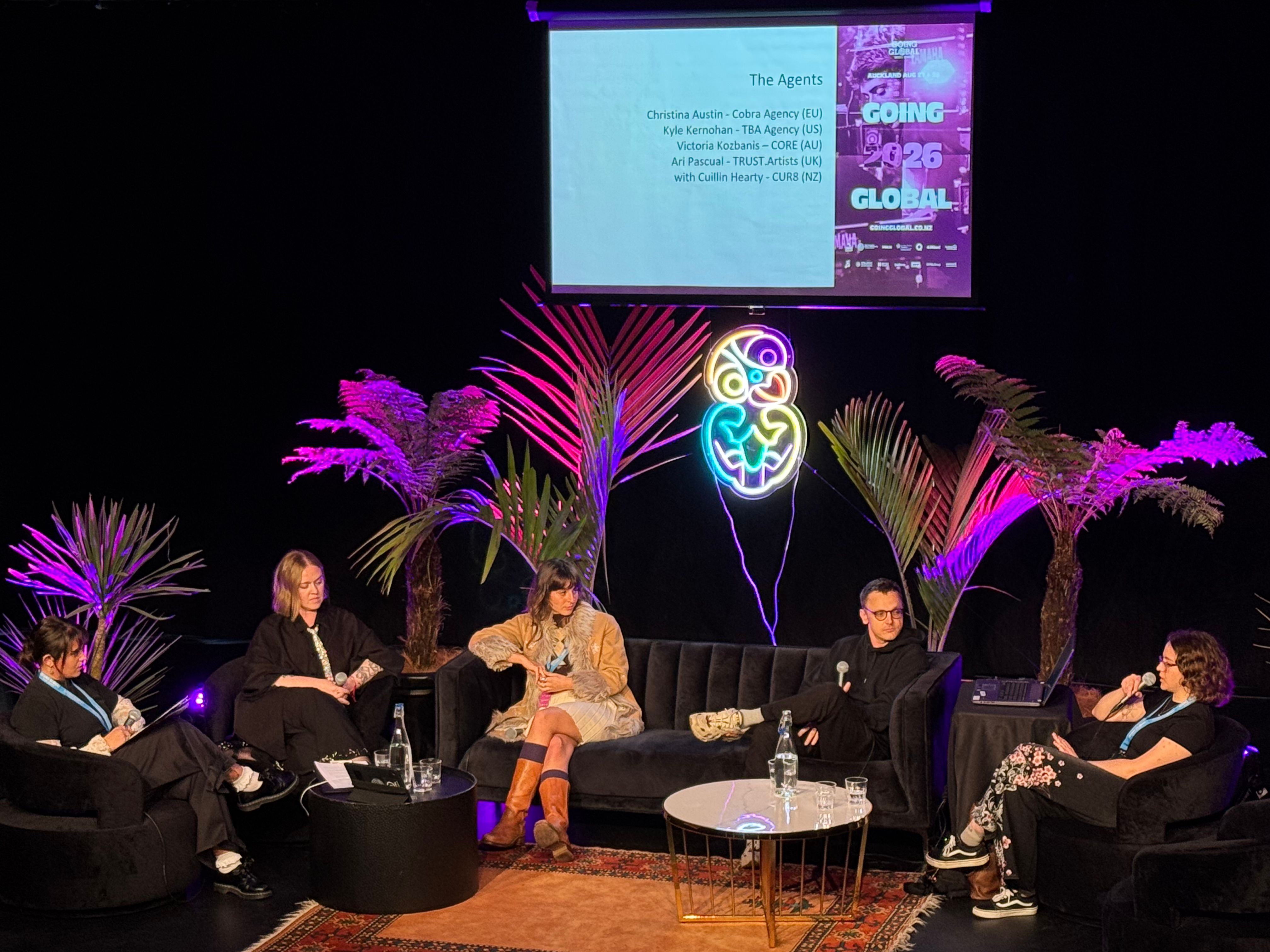
The Agents Know Where the Bodies Are Buried
Then came The Agents, featuring Christina Austin, Kyle Kernohan from TBA Agency, Victoria Kozbanis from Core, Ari Pascual from TRUST Artists and hosted by Cuillin Hearty from Curb.
If you're an emerging artist, this is the sort of session you should be paying very close attention to.
How do you approach an agent?
What should your email contain?
What shouldn't it contain?
How much information is too much?
How do you demonstrate that you're serious without sounding desperate?
What does an agent actually need to know before they can make a decision?
These might sound like basic questions.
They're not.
I've attended enough music-industry conferences over the years to know that the business keeps changing. Just when you think you've got it figured out, another platform arrives, another territory changes its rules, another business model collapses and somebody invents another way of getting music into people's ears.
The fundamentals remain, however.
Good music.
A compelling live show.
A clear identity.
Professionalism.
Relationships.
And knowing when to shut up and listen.
Going Global's agents session delivered plenty of insight into how artists can better understand the people they're trying to reach.
And that's the real value of this conference.
It doesn't promise a shortcut.
It gives you the map.
The Global Opportunity Is Sitting in Auckland
Looking around the room during the day, one thing becomes increasingly obvious: New Zealand's geographical isolation is still a problem, but it doesn't have to be an excuse.
Going Global exists to help bridge that gap.
The conference describes itself as Aotearoa New Zealand's premier international music-industry event, connecting local artists and industry with international figures across A&R, booking, licensing, management, marketing, promotion and publishing.
And this year's international presence is significant.
Among the speakers is American booking heavyweight Tom Windish, now Executive Vice President of A&R and Business Development at THE, whose artist roster and career history includes work around artists such as Lorde, Billie Eilish, alt-J, The xx, M83, Tove Lo and Viagra Boys.
That's not someone you normally find wandering into a local Auckland industry networking event.
But here he is.
And that's the point.
The world has come to New Zealand.
Now New Zealand needs to be ready to go back out into the world.
Don't Just Attend. Participate.
Going Global also understands that the showcase is every bit as important as the conference.
Its 2026 programme features artists including Sola Rosa, Keith Pereira, Ray Leslie, Frank On Tap, SKILAA and Pearly* and many others while the showcase programme is specifically designed to put artists in front of international festival bookers, agents and industry representatives.
The showcase application process itself tells artists something important: be clear about your music, provide live material, have someone available to represent you professionally and understand that the performance itself is part of the pitch.
In other words, don't turn up expecting someone else to build your career for you.
Do the work.
Have the songs.
Have the live show.
Know your story.
Know your numbers.
Know your audience.
And when you finally get in front of someone who might be able to help take you somewhere, be ready.
Why Going Global Matters
I've been to enough international conferences to know that you don't necessarily know which conversation is going to matter.
Sometimes it's the person sitting beside you.
Sometimes it's the panelist you've been too nervous to approach.
Sometimes it's the promoter you bump into at midnight.
Sometimes it's the person whose name you didn't recognise until you discover six months later that they represent an artist you've been listening to for years.
And sometimes it's a Seymour Stein.
That's the magic.
Music conferences are controlled chaos. They're networking speed dating for an industry built on instinct, relationships and the belief that somewhere out there is the next great song.
Going Global puts Aotearoa directly into that conversation.
For musicians who are stage-worthy, who have a few good songs, an image, a story and enough wit to understand that talent is only one part of the equation, this is not an event to casually overlook.
It's an opportunity.
And opportunities don't usually come with a second invitation.
So if you're an artist sitting at home wondering how you're ever going to break out of New Zealand, here's my advice:
Get out of the bedroom.
Get into the room.
Shake hands.
Listen.
Ask questions.
Play your songs.
Make friends.
Follow up.
And then do it again.
Because somewhere inside all those panels, conversations, coffees, emails and late-night encounters is the possibility that one relationship could change everything.
I've seen it happen before.
And after the first day of Going Global 2026, I'm convinced it can happen again.
The world is listening.
The question is: are you ready to play?
Going Global Music Summit & Festival 2026
Auckland, August 27–28, 2026
Presented by Independent Music New Zealand in partnership with the New Zealand Music Commission.