
Live at Whammy
27 August 2026
Live Review by Music Journalist: Paul Marshall
Going Global 2026: Auckland’s K’ Road Becomes Ground Zero for Aotearoa’s Next Wave
There are nights in Auckland when you go to a gig to see a band. Then there are nights when you go because you know you might be watching the beginning of something much bigger.
Tonight was the latter.
Kicking off at Whammy on Auckland’s Karangahape Road, the 2026 Going Global Music Summit & Festival turned the interconnected Whammy, Double Whammy and Triple Whammy spaces into a revolving door of Aotearoa talent, with twelve artists each given just 20 minutes to convince a room packed with music industry eyes that they have what it takes to travel beyond these shores.
And that is the beauty and brutality, of the showcase format. Twenty minutes. No excuses. No long introductions. No time to warm up. You get on stage and show the world exactly who you are.
Going Global, presented by Independent Music New Zealand in partnership with the New Zealand Music Commission, exists precisely for this purpose: connecting Aotearoa artists with international A&R, booking agents, festival programmers, labels, publishers, managers and media. Previous artists associated with the showcase include Tami Neilson, Tiny Ruins, Troy Kingi, Alien Weaponry, Fazerdaze and Nadia Reid.
Tonight, the future was already walking through the door.
AWNING
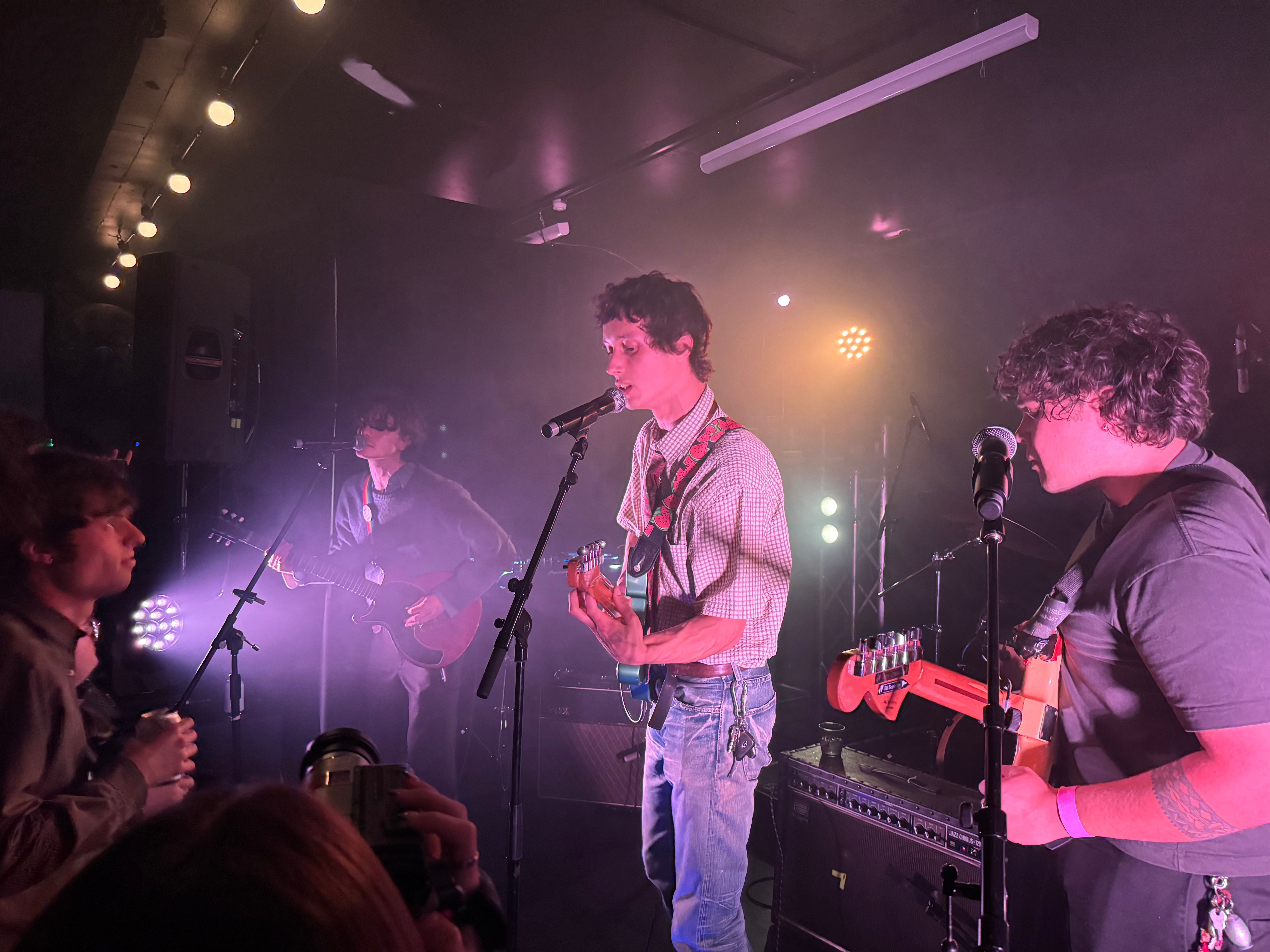
Awning, a young six-piece arriving with enough guitar hardware to make a pedal salesman consider early retirement.
Three guitarists and bassist. More than 23 effects pedals. A wall of potential sonic destruction.
And yet what immediately struck me was how little the sound actually changed considering the amount of technology sitting at their feet.
Awning operate in that increasingly fertile territory between alternative rock and indie, with a guitar-heavy attack that occasionally felt like somebody had thrown post-punk, indie sleaze and classic guitar-band swagger into the same blender.
At the microphone, the vocalist brought a sneering, theatrical presence, part post-punk menace, part Kurt Cobain-style disaffection, delivering the songs with the kind of detached rock-star posture that suggested he knew exactly where the camera was, even when there wasn't one.
Then things got physical.
During one number, his hair hung across his face before the performance slowly transformed him. By the middle of the song he was everywhere, jumping onto his amplifier, dropping down onto the floor, hunched over his guitar and pounding away like he was trying to physically extract the song from the instrument.
This was a band clearly capable of creating a visual moment.
There was also a technical gremlin lurking in the machinery. A problem hit at the beginning of one song, temporarily interrupting the flow. With that many pedals on stage, you could almost hear the gods of electrical engineering laughing somewhere backstage.
Still, Awning recovered.
And as they approached the finish line, the question “What’s what and whose where?” became the hook that pulled the set towards its conclusion.
There is something here. The challenge will be turning all that equipment, attitude and guitar energy into a sonic identity that is unmistakably theirs.
Twenty minutes isn't long.
Awning made sure you remembered them.
CABILIN
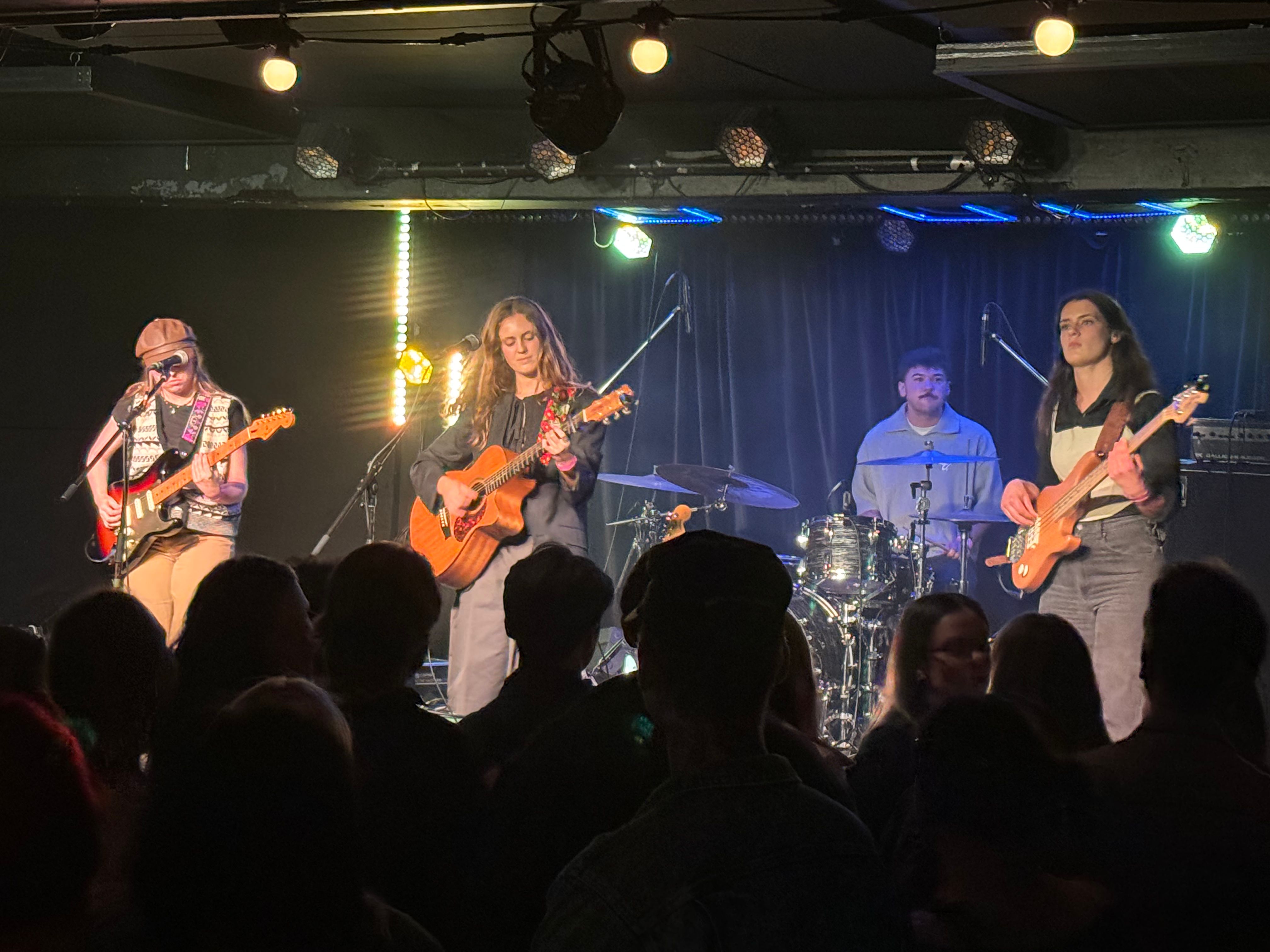
Next came Cabilin, a four-piece built around the classic guitar, bass, drums and vocal configuration.
It should have been simple.
Unfortunately, the technology had other ideas.
A crackling and banging lead connected to the drummer's laptop setup immediately began throwing musical grenades into the room. What should have been an opportunity to let the band's laid-back alternative sound breathe instead became an extended battle between four musicians and one particularly determined electrical gremlin.
Two songs effectively disappeared while the engineers worked to solve the problem.
That is a killer at a showcase.
Momentum is everything when you've only got twenty minutes. By the time Cabilin finally got moving again, the air had gone out of the room a little.
Ironically, this isn't even the first time technical chaos has followed the band into a venue. Their previous gig apparently managed to trigger the fire alarm and evacuate the building.
Tonight they didn't quite manage the full evacuation, but they came dangerously close to testing the patience of the PA system.
Once underway, there were moments to appreciate. The songwriting has a relaxed, easy-listening quality, with occasional hooks that caught the ear. But compared with some of the more dynamic performances around them, the songs tended to sit in a similar gear for too long.
And this is the unfair part of showcase nights.
You inevitably judge one band against the next.
At their own headline show, with an audience that has come specifically to see them, Cabilin may well make a very different impression.
But tonight wasn't a headline show.
Tonight was an audition.
And unfortunately, the technical problems became part of the performance.
FRANK ON TAP
Then came Frank On Tap, and suddenly the room shifted.
This was the point where the night really started to catch fire.
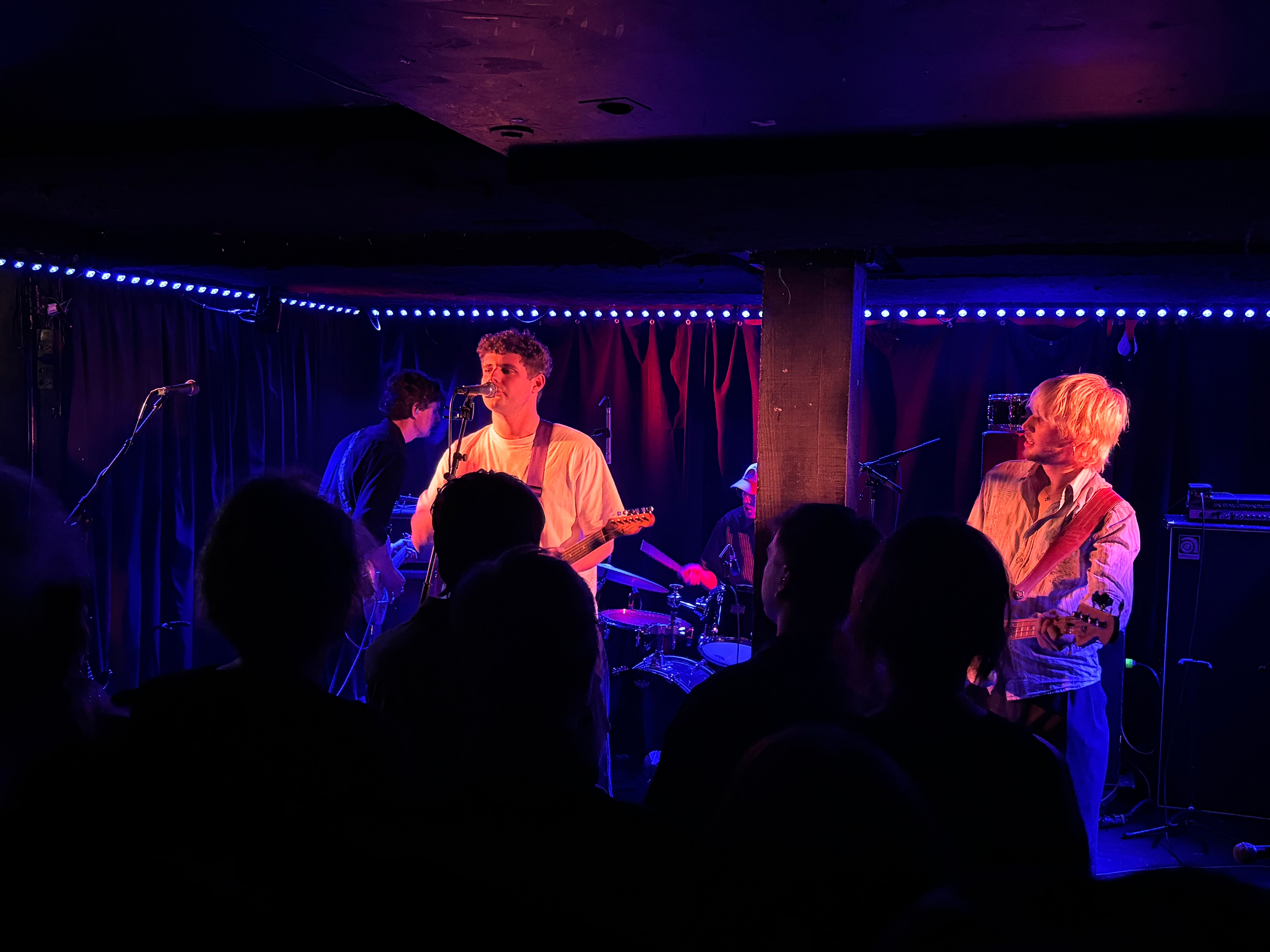
From the opening bars, the Auckland four-piece came out swinging, searing guitars, tight musicianship and the kind of energy that immediately tells you a band is absolutely delighted to be standing on that stage.
And they weren't shy about saying it.
They were clearly very happy to be playing one of Auckland's most iconic venues.
That enthusiasm translated directly into the performance.
Frank On Tap have been steadily building their reputation in the Aotearoa alternative-rock scene since forming around their Wellington roots before relocating to Auckland. Their debut album, At Sixes and Sevens, arrived in September 2025 after being recorded with producer De Stevens at Roundhead Studios.
And you could hear the maturity that comes from putting the songs through that process.
The guitars had bite without becoming messy. The rhythm section was locked in. The arrangements had genuine light and shade, allowing the songs to breathe before hitting harder when required.
Most importantly, there were songs.
Good ones.
Frank On Tap have two distinct vocalists, and the combination gives the band an extra dimension. The harmonies were particularly strong, with even the drummer getting in on the vocal action.
It's the sort of detail that separates a decent live band from one that starts making people in the industry lean forward.
The band has already been generating attention beyond the Auckland underground, including touring Australia in support of fellow Kiwi rockers NO CIGAR. Rolling Stone Australia has also highlighted Frank On Tap among Aotearoa's emerging artists.
Tonight, they looked like a band beginning to understand exactly how big they could become.
SKILAA
And then there was SKILAA.
I've seen this band before, so I knew what was coming.
Or at least I thought I did.
SKILAA have always been difficult to put inside a single musical box. Their sound pulls together R&B, neo-soul, alternative folk, hip-hop, funk, jazz and improvisation, with the band's Auckland Jazz School origins providing a particularly strong musical foundation.
Tonight, they simply sounded like SKILAA.
“Who's excited for the K’ Road train?” came the call from the stage.
The response from the crowd told the story.
This was a band that understood the room.
Funk-infused pop began pouring out of the speakers and suddenly standing still became almost impossible.
The rhythm section was absolutely locked.
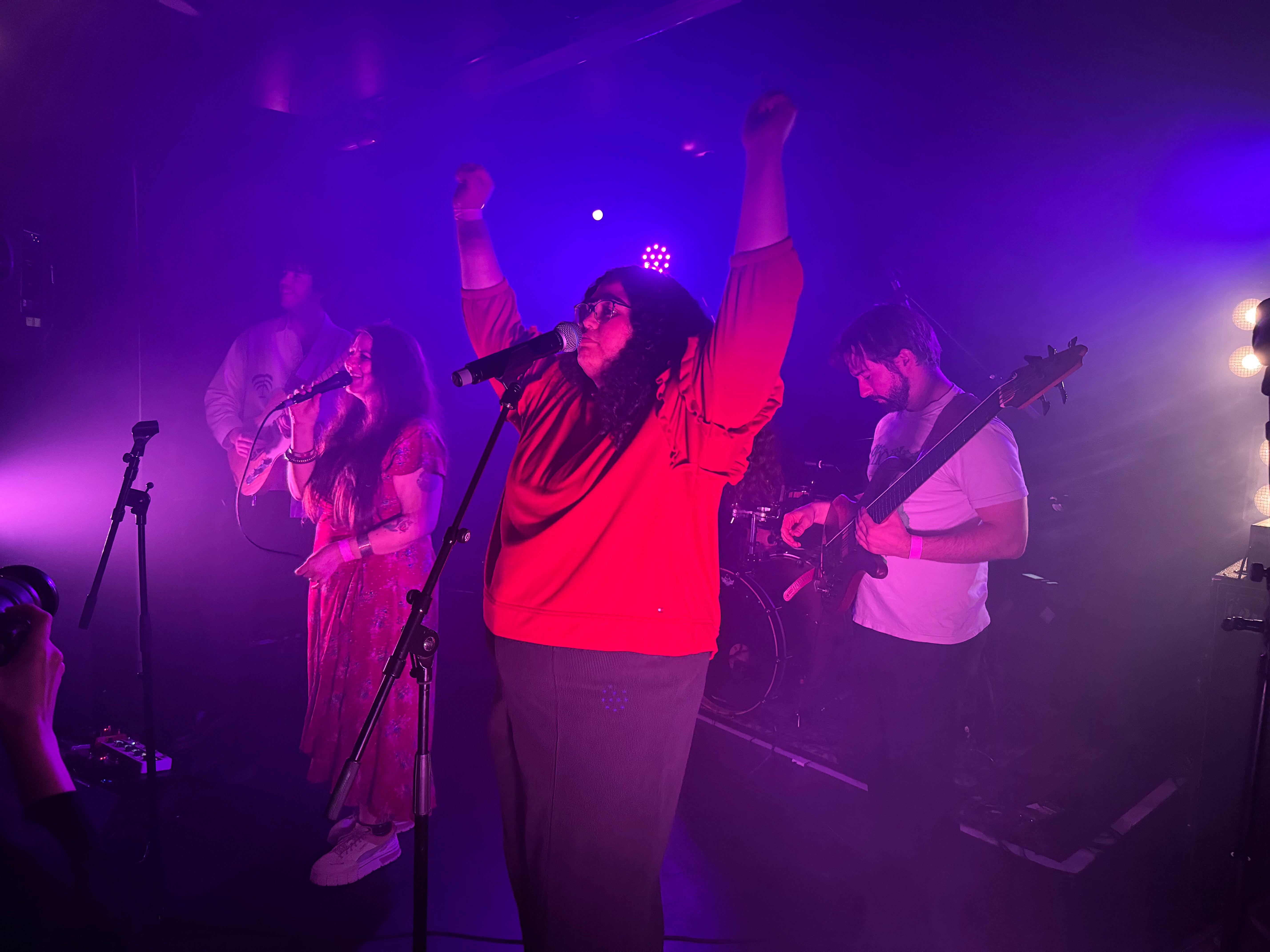
And then there is Chelsea Prastiti.
Her voice has always been the secret weapon of SKILAA, but tonight she sounded ridiculous, in the best possible way.
Melismatic runs, trills, scat-like phrasing and vocal gymnastics that most singers would need a safety harness to attempt.
There was one problem.
Chelsea had a cold.
She told us so.
The sound engineer had even given her a separate microphone so she wouldn't share one with anyone else.
You would never have known.
Her voice was still second to none.
The songs groove, but there is serious musicianship underneath them. At one point the drummer unleashed a succession of triplets over the main rhythm, adding a rhythmic complexity that could easily have sounded like showing off but instead felt completely natural within the arrangement.
SKILAA have been developing this sound for years. Their roots go back to 2017, when members met through the University of Auckland Jazz Programme, and their musical vocabulary has continued to expand through releases including Fantasy Life and the 2024 album Tiger in the River.
And then came my favourite.
“Scratch Me Out.”
The bass and drums locked together and the whole thing just lifted.
This is why showcase nights like Going Global matter.
You can read a press release.
You can listen to a Spotify playlist.
You can study a band's biography.
But then you stand two metres away while the bass player and drummer lock into a groove, the singer throws an impossible vocal run into the room and suddenly you understand.
That's the point.
THE AUDITION
Going Global isn't really a festival in the traditional sense.
It's an international audition disguised as a great night out.
The 2026 edition selected its showcasing artists from more than 190 applications, with the final programme representing the extraordinary breadth of independent music being made across Aotearoa. Each artist gets a focused 20-minute performance in front of international delegates, local industry and the public.
That format creates a fascinating tension.
There is nowhere to hide.
A band can spend an hour building an atmosphere at its own headline show.
Here, you've got twenty minutes.
Make me care.
Make me remember your name.
Give me a reason to Google you before I get home.
Tonight, some bands were more successful at that than others.
Technical problems hurt Cabilin badly. Awning showed plenty of potential but are still wrestling with how to translate their enormous arsenal of guitar technology into a more distinctive sonic identity.
Frank On Tap, meanwhile, looked increasingly ready for the next level.
And SKILAA?
They reminded everyone why they have survived, evolved and remained one of K’ Road's most interesting musical propositions.
The international music industry has come to Auckland to find out what Aotearoa has to offer the world.
If tonight was anything to go by, the answer is:
Quite a lot.
And that's before we've even made it through night two.
Reviewer: Paul Marshall
Photography by Paul Marshall
WATCH THE LIVE VIDEO at Paul Was There -