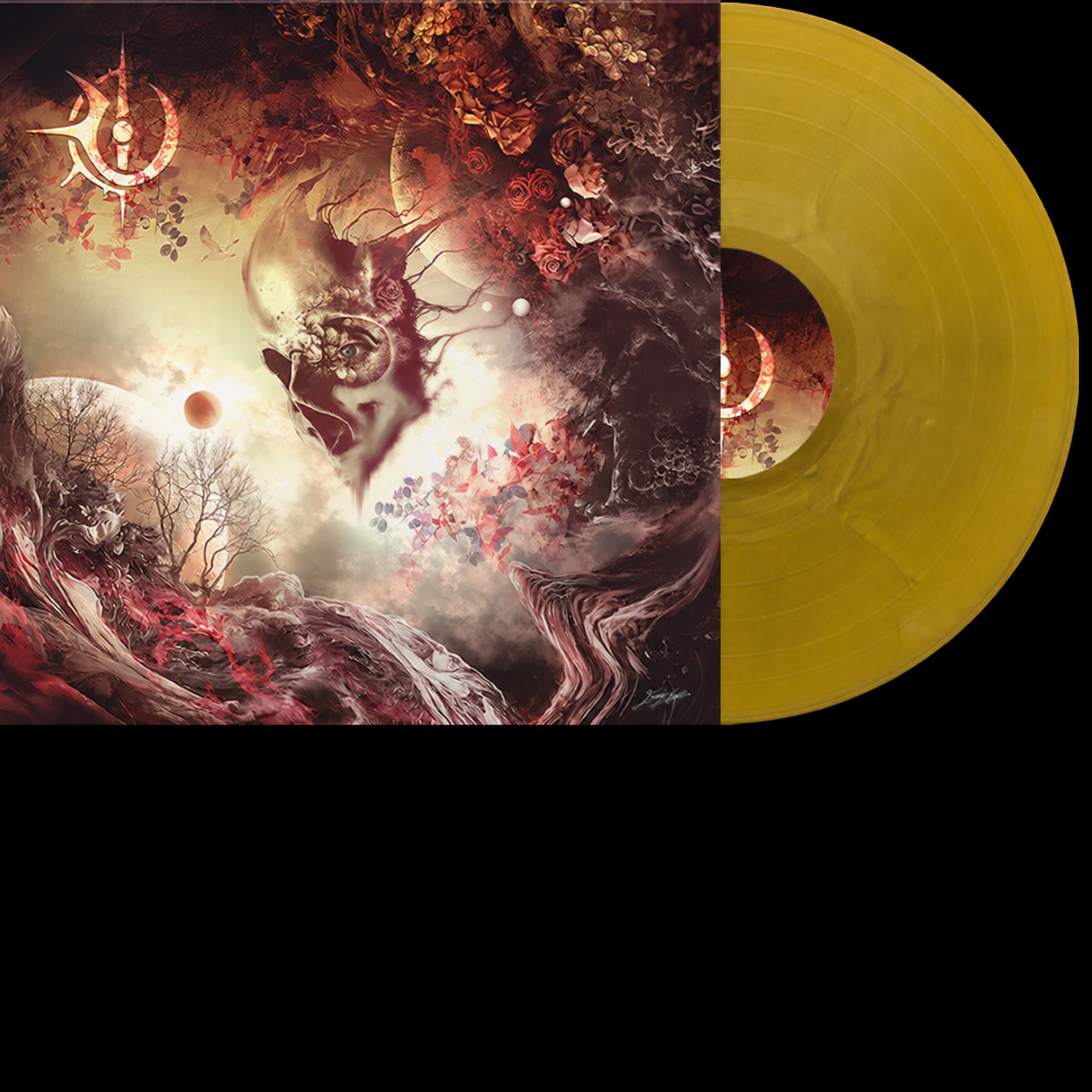
Frontman Reed Alton talks to Paul Marshall about the self-titled album, how Benji Webbe of Skindred helped shape his musical DNA, and New Zealand ambitions.
Interview by Paul Marshall
There is something rather satisfying about a band that refuses to stand still. For Canadian heavy rock outfit Osyron, the journey has been one of persistence, evolution and what Reed Alton might describe as a ten-year overnight success.
The Calgary-based outfit have been building their identity since 2012, and with their fifth full-length release, they've decided it's time to put their own name firmly on the cover. Simply titled Osyron, the new album arrives on November 27 and is already attracting some serious attention.
But this isn't just another album release. The band have approached the project with a renewed sense of purpose, even launching a Kickstarter campaign before entering the studio. Offering everything from vinyl bundles and handwritten lyrics to personal singing lessons with Reed himself, the campaign proved just how much support the band have behind them, finishing an impressive 131% overfunded.
That's a pretty good indication that people are paying attention.
I caught up with Reed to talk about the new album, his development as a vocalist, the artists who shaped his musical upbringing, and a rather unexpected appearance by some extraterrestrials along the way.
A NEW BEGINNING
So, Osyron have been building their identity since 2012, and now you're releasing a self-titled album. That's quite a statement for a band on its fifth full-length record. Why is this the moment to put your own name on the cover?
Reed doesn't hesitate when explaining the thinking behind the decision.
“honestly, what it came down to was we felt like this record was more or less, like a rebirth, we even rebranded our logo”.
Rebirth is an interesting word, particularly for a band five albums into its career. But listening to the new material, there's certainly a sense that Osyron are embracing a fresh chapter rather than simply revisiting familiar territory.
Their single “Higher” is a particularly good example, combining atmospheric passages, melodic vocals and some seriously demanding rhythmic sections. The band have described it as a strong representation of where they are today.
I ask Reed which part of the track feels most representative of his evolution as a vocalist.
“ I mean, I'm a very regimented and technical singer, you know? Like, it's something that I've worked tirelessly at over my entire career and I'm always trying to evolve. I mean, if you listen to earlier Osyron records I’ve evolved my running style and abilities in different facets and from different angles, the guys write incredible riffs and beautiful melody lines and passages, and I'm always trying to serve the song from a vocal perspective with my one-fifth contribution, you know, if the song calls for something heavy. I'm gonna try and get heavier”
And heavy he gets. Reed has a great timbre and presence to his voice, one that suits the metal genre particularly well. There's also an impressive sense of control in his delivery, with the ability to move between melodic passages and heavier vocal territory without sounding as though he's having to fight the music. On this record, he's delivering the goods effortlessly.
THE PERSONAL SIDE OF THE MUSIC
Behind the riffs and the technical musicianship, there's always the question of what drives the lyrics. Is there a particular lyric on the new record that feels almost uncomfortable or personal to sing about?
Reed explains that his songwriting is rooted in emotion, even when the subject matter isn't necessarily autobiographical.
“You know what, I mean, they're all personal. I've always said that I don't write necessarily first from my point of view in my own personal life, but it's definitely my own point of view when it comes to feelings or emotions, you know, I'd say, track number 8 (Remade), that chorus is very dark and brooding and haunting for me, I think, just in terms of the subject matter, the lyrical content that I'm writing with, the inspiration behind that song as well is very emotional”.
It's an interesting distinction. Sometimes the most compelling songwriting doesn't come from telling your own story word for word, but from taking an experience, an emotion or an observation and turning it into something other people can connect with.
That brings us nicely to “Telos”, the album's opening track and one of its central statements. The song tackles the way society, institutions, addiction and manufactured desire can pull people away from their own purpose.
Was there a particular experience or realisation that made this subject impossible for him to ignore?
“I think if you look around the world right now, it's, uh… you know, I think for the common person, the world's in a very interesting place, it's just, you know, our one perspective and frustrations towards where things are at. And I don't think it's directed at one particular subject or particular group or particular entity of any sort. I think it's just more of a frustration, a frustrating shout and call out into the ether”.
There's clearly more going on here than simply writing another heavy metal record. Osyron are using their music to reflect on the world around them, and “Telos” sounds like an invitation to question some of the things we perhaps take for granted.
THE VOICES THAT SHAPED REED ALTON
I wanted to explore Reed's musical upbringing a little further. Obviously, metal has played a huge part in his musical development, but I was interested to know whether there were any records, singers or artists outside the traditional metal world who first taught him something about phrasing, melody or storytelling.
His immediate response made me smile.
“ Well, I guess, how much time do you have, Paul?”
That's usually a pretty good sign that you're talking to someone who genuinely loves music.
“I'm definitely a product of a lot of my influences, and they don't just stem in metal by any means. I really love rock. I love grunge. Some artists that really spoke to me at a young age were definitely Layne Staley and Chris Cornell. I'd also say Russell Allen, Bruce Dickinson, Rob Halford. I was always infatuated with vocalists that were able to hybrid sing and sing multiple different styles within the same song, so singers like, Howard Jones from Killswitch, Stu Block from Iced Earth, Joni Mitchell”
That's quite a collection of influences, and it tells you plenty about the kind of vocalist Reed has worked to become. From the unmistakable grunge voices of Layne Staley and Chris Cornell to the theatrical power of Bruce Dickinson and Rob Halford, there's a lot of musical ground covered.
But then comes one influence I wasn't necessarily expecting: Benji Webbe from British bands Skindred and Dub War.
And when Reed starts talking about him, you can hear the admiration.
“Benji Webb was one of those vocalists for me that I was just…like… I remember my friend Justin showing me Rat Race for the first time, and I did not know what the fuck I was listening to. I did not know what was happening, I didn't understand that someone could do that, sing with a reggae…the Jamaican accent while, while sounding like, Mike Patton, while, like, screaming to clean, the vibrato. He has such a unique vibrato.
It was just very inspiring. I owe a lot to that guy, to be honest with you. Especially Dub War the 1995 record. My neighbour Andy is from Newport Wales, he used to see Benji Webb downtown and go over to the club shows and stuff before those guys kind of broke through. Andy found me an old CD of Pain, and he gave it to me. And I gotta give a huge shout to Andy for that, because that means a lot to me. Like, I seriously…if Benji ever gets to see this, like, you are awesome. You are a fantastic vocalist. Holy crap. You influenced some dude from Calgary, Alberta, Canada, and so, yeah, he's, he's definitely my, uh, he's definitely my top tier list, for sure.”.
It's a brilliant insight into how musicians influence one another across countries, genres and generations. Sometimes all it takes is a friend putting a CD in your hands or playing you a song that completely changes how you think about music.
And I reckon Benji Webbe would be pretty pleased to know that somewhere in Calgary, Canada, there's a vocalist who still remembers that first encounter with “Rat Race”.
THE FANS GET INVOLVED
Osyron's Kickstarter campaign is another interesting part of this album's story. Rather than simply asking fans to pre-order a record, the band opened up the creative process, offering vinyl bundles, handwritten lyrics, music lessons and opportunities to get closer to the making of the album.
The campaign ultimately reached 131% of its funding target.
That puts fans in a much more active role than simply buying a ticket or streaming a song. I ask Reed what the campaign taught him about the people who genuinely care about Osyron.
“that they exist! I gotta be honest with you, I was probably the most reserved and apprehensive when it came to this process. I mean, this was spearheaded by Camden (Cruz), our manager, and a good friend, one of the guitar players for Seven Kingdoms. Because they've done a lot of Kickstarter campaigns, he was the one that kind of encouraged us to do this.”
There's something quite refreshing about that answer. Even after years of working towards the band's goals, it's clear that seeing fans put their hands in their pockets to support the project has meant something special.
And perhaps that's one of the biggest rewards of sticking around long enough to build a genuine following. You discover that there are people out there who believe in what you're doing just as much as you do.
ONE SONG TO CONVINCE THE ALIENS
Now, I like to throw in the occasional question that takes an artist completely away from the usual album-promotion conversation. So, imagine Osyron are headlining a festival on Mars in the year 2050. You've got one song to convince an audience of aliens that human beings are worth listening to.
Which Osyron song do you play, and what do you hope these extraterrestrials understand about us when they hear it?
Reed comes back with an answer I wasn't expecting, and it's absolutely brilliant.
“Anunnaki, because that is about aliens. We've known you've existed, we respect you, we hear you, we celebrate you, and don't eat us.”
I have to say, that's a pretty solid opening statement for humanity's first intergalactic music festival.
I compliment him on his off-the-cuff finishing line, “don't eat us”. That's a great tagline for when we eventually meet the aliens!
Perhaps Osyron have already got their extraterrestrial marketing campaign sorted.
FROM CALGARY TO NEW ZEALAND?
Bringing things back down to Earth, I ask Reed where the band are based.
“so myself and the band are based in Calgary, Alberta, which is, one of the western provinces, so we're kind of in the foothills of the Rocky Mountains.”
Not a bad place in the world to call home. With the Rocky Mountains practically on the doorstep, I imagine there's plenty of inspiration for a band whose music can be as expansive as the landscape around them.
We have time for one last question, and naturally, being based in New Zealand, I have to ask when Osyron might consider bringing their music down this way.
Reed's answer is particularly encouraging.
“ I mean, it would be, obviously, a dream. I mean, we're all huge Lord of the Rings fans. I've got a bunch of tattoos, like, some of us are tattooed up, and a bunch of my tattoos are actually, Middle Earth-inspired.”
He then goes on to show me some of his ink.
“behind my ear, I've got the leaf of Lórien, I've got old Elvish. I mean, the dream to go to New Zealand, I just heard it's an absolutely stunning place, and the people are absolutely fantastic, it'd be a dream come true for us to get down New Zealand.”
Well, Reed, that's an invitation we'll happily take. Any band with a love of Middle-earth is going to feel right at home here, and there's certainly no shortage of New Zealand fans who would love to see Osyron bring their music to our shores.
THE VERDICT
What comes across during my conversation with Reed Alton is a genuine passion for the craft. Here's a vocalist who has spent years refining his abilities, drawing inspiration from an impressively diverse range of artists and continually looking for ways to serve the music rather than simply showcase himself.
The new self-titled album represents more than just another milestone in Osyron's discography. It's a statement of intent, a creative rebirth and a reflection of a band that knows who it is while remaining hungry to discover what it can become.
From the muscular delivery of “Higher” to the thought-provoking opening of “Telos”, there's plenty here to suggest that Osyron are operating with renewed confidence. Add a successful Kickstarter campaign, a committed fanbase and a frontman who can talk just as enthusiastically about Benji Webbe as he can about the technical demands of metal vocals, and you've got a band worth paying attention to.
Osyron's self-titled fifth album arrives November 27.
And if Reed gets his wish, perhaps we'll see him and the boys trading the foothills of the Rocky Mountains for the hills of Middle-earth before too long.
Just remember, when the aliens eventually arrive, play them “Anunnaki” and whatever you do, don't eat us!
Osyron - Osyron Track Listing:
- Telos (04:04)
- Unkind (03:53)
- Feather & Flame (05:06)
- Higher (03:57)
- Forge the Wake (06:28)
- Consuming Giants (05:32)
- The Accursed (05:01)
- Remade (05:18)
- Lost in Reflections (06:17)