
Live at The Q Theatre
22 October 2026
Live Review by Music Journalist: Paul Marshall
Play It Strange Annual Showcase 2026: The Future of New Zealand Music Is in Good Hands.
From heartfelt songwriting and silky sibling harmonies to an electrifying rap performance and a South Auckland anthem, the Play It Strange Annual Showcase proved that the next generation of Aotearoa musicians has plenty to say and the talent to make us listen.
I arrive at Q Theatre to find a free open bar, and naturally, I waste little time making the most of it, with a ginger beer as my poison of choice. My first encounter is Sanaya, a new acquaintance and hard-working music teacher who's here supporting her students. She's one of many educators and supporters in the room who put in the hours behind the scenes, helping young musicians find their feet.
Next up, a conversation with Colleen, who works at Auckland Arts Festival and shares that same enthusiasm for nurturing emerging talent. It's a reminder that the music business doesn't begin and end with the people holding the microphones. There are passionate people behind the scenes helping create opportunities, opening doors and making sure the next generation gets its shot.
Settling into the front row, bang slap in the middle, with a cracking view of the stage. The woman beside me has travelled from Hamilton to watch her two daughters perform. More on that shortly.
MC Mike Hall kicks things off with a charming story about wearing his grandfather's classic tweed jacket, possibly brought over from Scotland many moons ago. Looking suitably dapper, he introduces our first act.
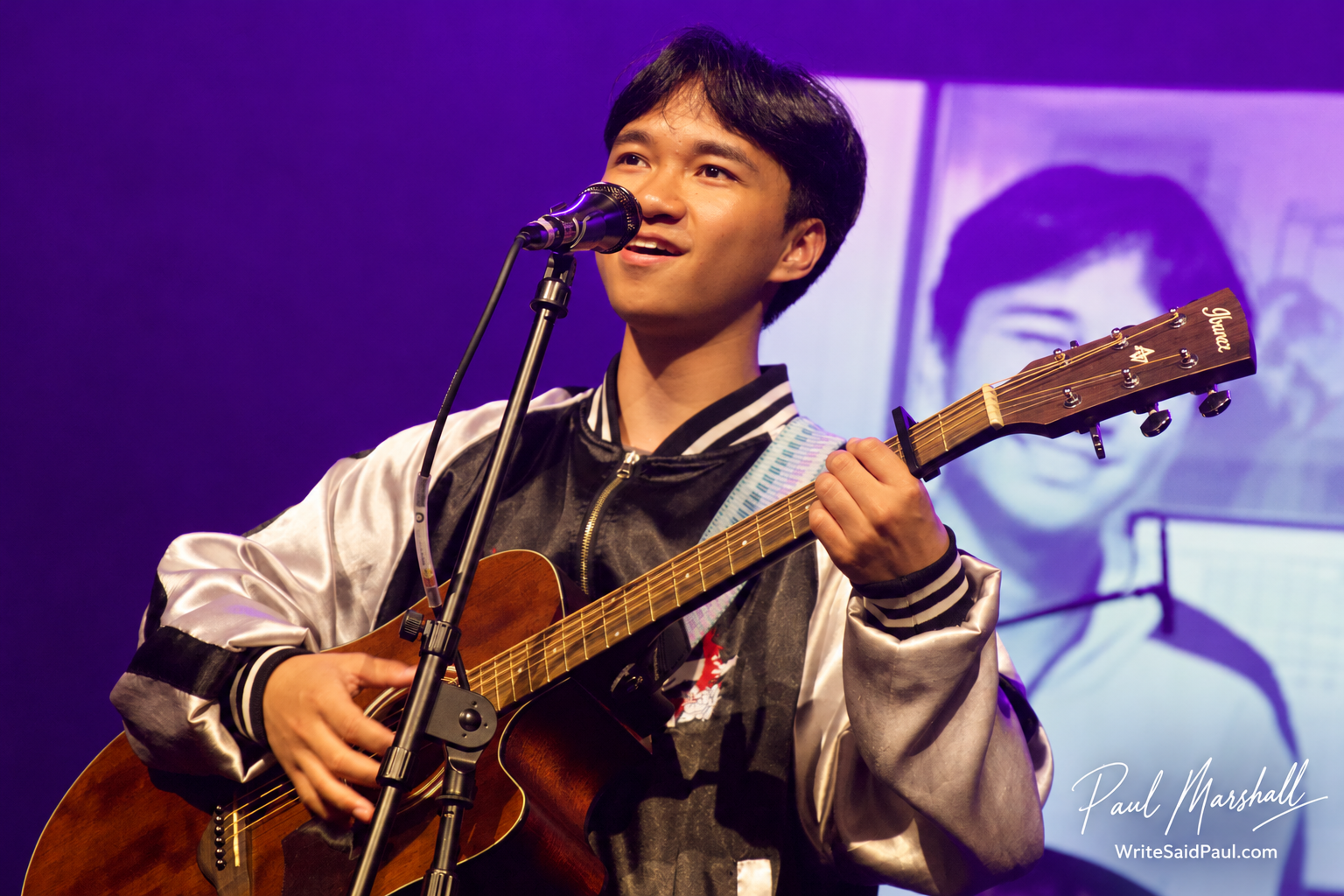
Earl Legasto: A promising start
First up is Earl Legasto, who encounters a few technical gremlins early on. His guitar isn't sitting quite right in the mix, and the sound engineer takes a few bars to get things sorted. It's one of those moments that can throw a young performer off his game, but Earl gets on with it, and soon enough we're back on track.
The standout for me is “Overgrown Garden.” Earl has a pleasing voice, delivers the song well and gives us a glimpse of what he's capable of. There's no need for unnecessary theatrics here; it's about the song, the voice and the young artist standing in front of us.
Opening a showcase can be a tricky business. You're introducing yourself to an audience that's still settling in, and you've got to win people over without the benefit of a big production or an established following. Earl makes a solid start to the evening.

Meadow Mia: A family affair with a beautiful payoff
Next, Meadow Mia walks up to the microphone, and someone in the audience calls out, “You're so pretty!”
“Thanks very much,” she replies.
It's a lovely little exchange, and I'm sure it does her confidence no harm whatsoever. But the real test comes when she starts singing, and Meadow proves she's got far more than a pretty face going for her.
Her voice is silky, warm and powerful, with a quality that immediately draws you in. She's got a natural presence, and there's a confidence in her delivery that suggests somebody who understands the emotional connection between a singer and a song.
Then comes the moment that takes the performance somewhere particularly special.
Meadow introduces her second song, explaining that it's something she's working on with her sister, River. It's a work in progress, she tells us, before launching into “Come Back to Me.”
The arrangement is beautifully sparse, leaving plenty of breathing room for the vocals. And when River joins her, those harmonies begin to weave together in a way that makes you stop and pay attention. No overblown production, no need to fill every available space with sound, just two voices, a song still taking shape, and a genuine musical connection.
And here's the kicker: the woman sitting beside me in the front row is their mum.
That's right. I've been sitting next to Mamma Mia all along!
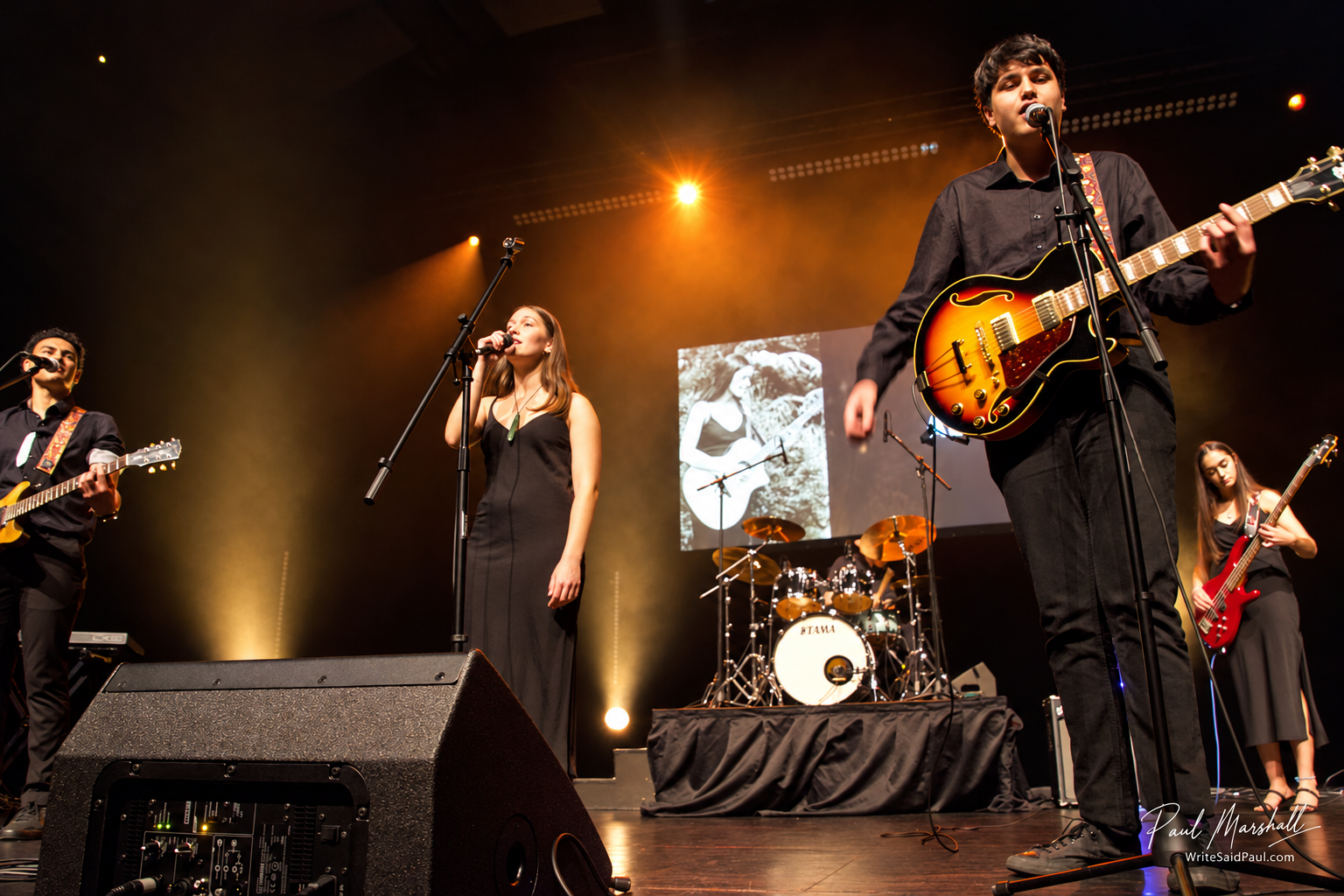
Alofau: Keeping the show moving
The next performer is Alofau, identified in the programme as Anabelle Tuato’o, who delivers her vocals with confidence and style. Alongside her, the bass player provides the backbone of the music, holding everything together with a solid, driving performance. There’s strength, attitude and talent on display here.
Unfortunately, the technology decides to have another say in proceedings. During the second song, the keyboards stop working, leaving the performance temporarily short of an important ingredient.
But these things happen in live music, and how you handle them says plenty about your professionalism. The performer keeps things together while the technical issue is addressed, refusing to let the hiccup derail the set.
It's not the smoothest passage of the evening, but credit where it's due: the show must go on, and the ability to keep your composure when something goes wrong is a valuable lesson for any emerging artist.
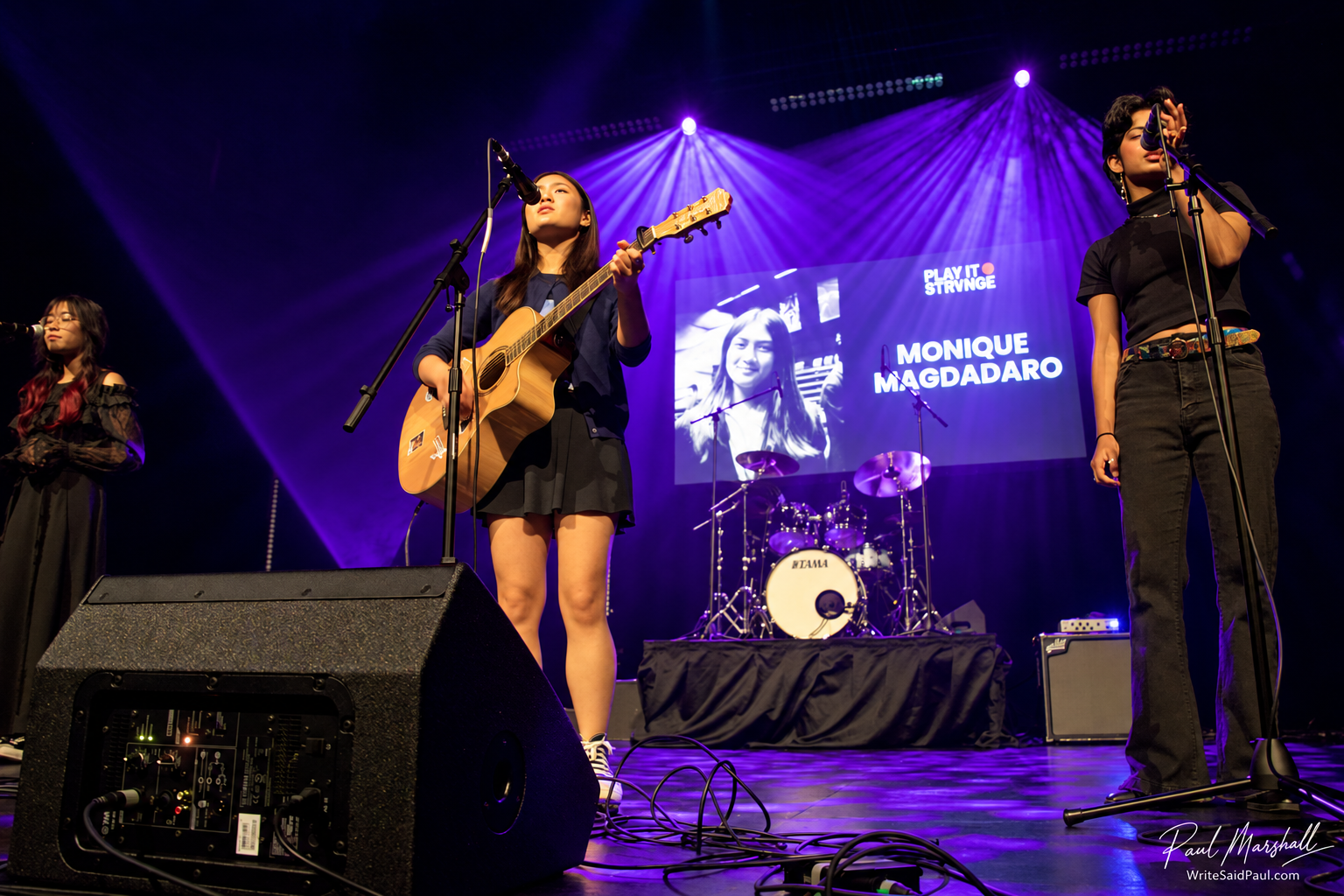
Monique Magdadaro: The winning song that caught Gin Wigmore's ear
2026 National Songwriting Competition winner, “You You You”
Now we get to one of the night's most significant performances.
Monique Magdadaro takes the stage with “You You You,” the song that won the 2026 Play It Strange National Songwriting Competition. The track was written about losing a close friend, and there's a deeply personal foundation beneath its catchy chorus.
Monique delivers it with confidence and strong vocals, giving the song the sort of assured performance that makes you understand why it stood out from such a competitive field.
And what a field it was. More than 500 original songs were submitted to this year's competition, with the judging panel featuring some serious New Zealand songwriting firepower, including Gin Wigmore, Bret McKenzie, Kaylee Bell, Riiki Reid, Melodownz and Shaan Singh of Drax Project.
Gin was so taken with Monique's song that she expressed a desire to work with her, an offer that subsequently became a reality, with the two collaborating.
That's no small thing for an emerging songwriter. When an established artist of Gin Wigmore's calibre hears something in your work and wants to help develop it, you know you've made an impression.
And listening to Monique tonight, it's easy to see the appeal. There's a memorable melody, a chorus that sticks, and a vocal performance that doesn't try to be something it isn't. The song has its own identity, and Monique sells it with conviction.
Steve Avery: The Lion Foundation, and a band called Bad Mince
Between performances, we hear from several guest speakers, all helping to explain why an event like this matters. The standout speech comes from Steve Avery of The Lion Foundation, one of Play It Strange's major supporters.
Avery talks about his involvement with the organisation before revealing a little something about his own musical past: as a kid, he was in a band called Bad Mince.
Now, there's a name that demands further investigation!
It's a brilliant little revelation, and it brings a smile to the room. Here we are, celebrating the next generation of musicians, and one of the people helping to make their opportunities possible has his own musical history tucked away in the archives.

104 — Luke Van Wyk: A young rapper with serious stage presence
2026 Junior Songwriting Competition winner
Just when you think you've settled into the singer-songwriter vibe of the evening, Luke Van Wyk, performing as 104, comes along and changes the temperature completely.
This is a different beast.
104 is an excellent rapper and beatmaker, and from the moment he gets going, the stage becomes his playground. He's twitching, moving, working every inch of the space, completely immersed in his music. His body seems to respond to every beat and syllable, and there's an intensity to his performance that makes it almost impossible to look away.
Some performers stand at a microphone and deliver their songs. Others inhabit them. Luke belongs firmly in the latter category.
The music is strong, the performance is outstanding, and the physicality of his delivery gives the set a completely different energy from what we've heard so far.
What's particularly impressive is that his movement doesn't feel like a collection of rehearsed gestures designed to make him look busy. He appears genuinely lost in the rhythm, and that sense of total commitment becomes infectious.
Keep an eye on 104. This is one to watch.
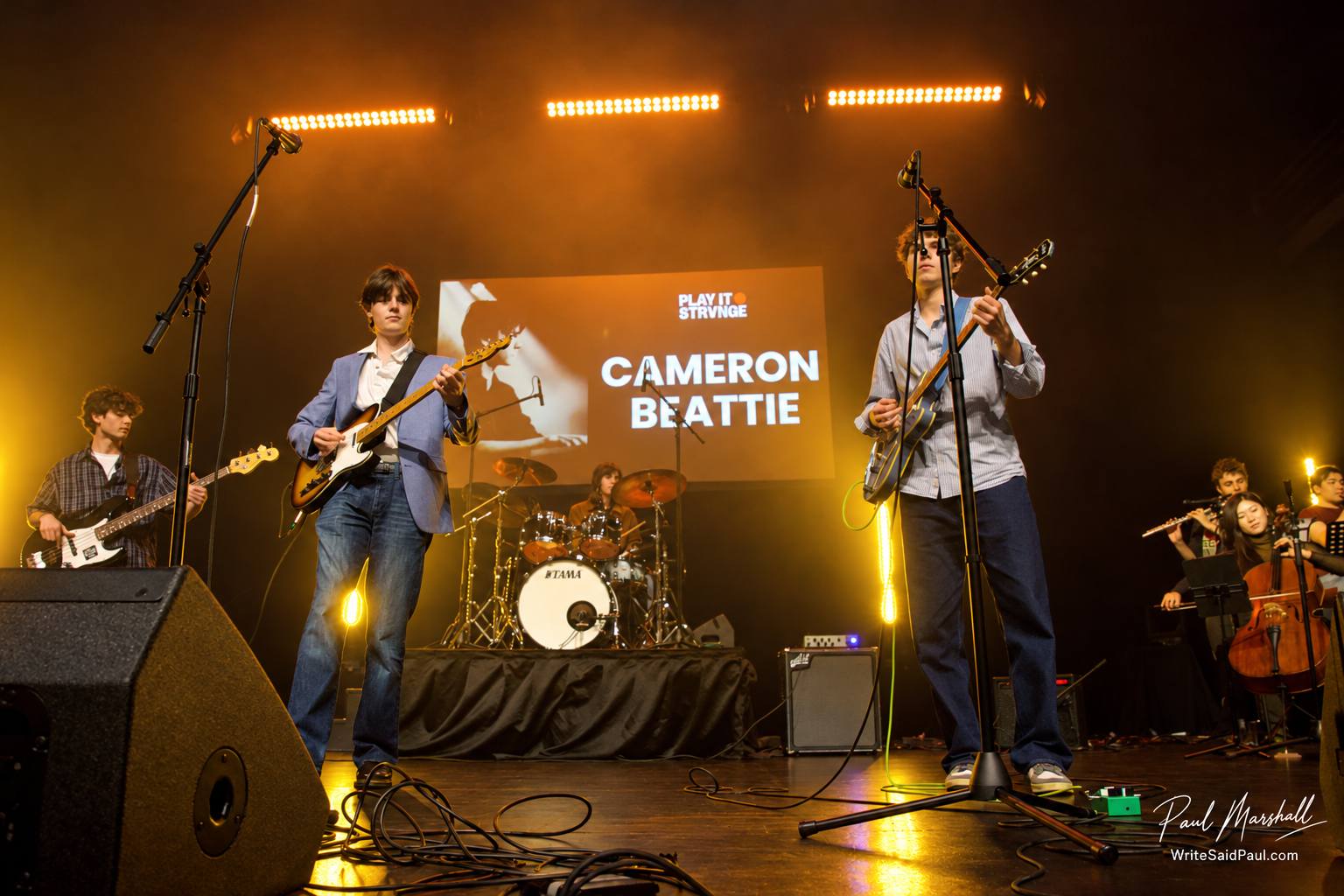
Cameron Beattie: Songs, musicianship and a band that delivers
Next up is Cameron Beattie, and the shift in musical style brings us into a more band-oriented sound.
The band is great, the drummer is excellent, and the arrangements give the songs a solid foundation. Cameron delivers his vocals nicely, while the songwriting shows real promise.
There's a lot to like here. The musicianship is tight, the songs are well put together, and the performance feels like a group of musicians who understand how to work together rather than simply playing their individual parts.
But the performance takes things to another level when they’re joined onstage by a quartet of aspiring musicians from the Auckland Philharmonia: Dimitrios Koulianos on trumpet and flugelhorn, Iggy Epstein on flute, Irene Kim on viola, and Esther Lee on cello.
The addition of these classical instruments brings a whole new dimension to the songs, adding depth, texture and an extra layer of musical sophistication. The result is an outstanding performance that showcases what can happen when talented young musicians from different backgrounds come together.
This feels like a supergroup in the making, and it’s a brilliant example of how collaboration can elevate good songwriting into something genuinely special.
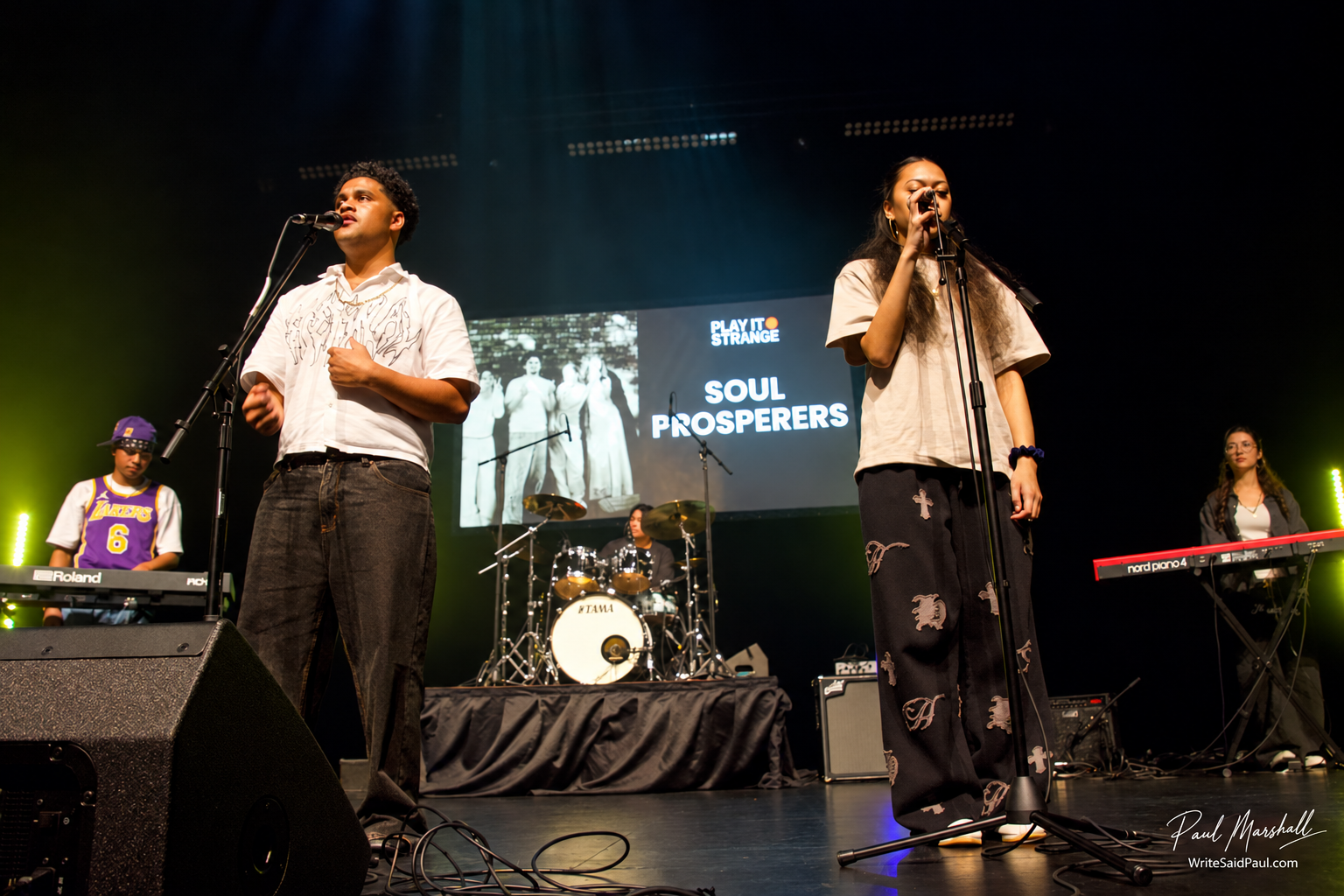
Soul Prosperers: South Auckland stories, delivered with conviction
Every showcase needs a strong finish, and the final act of the evening is Soul Prosperers from Papatoetoe High School.
Their appearance is another reminder of the depth of musical talent emerging from New Zealand's schools. The group represents a school with a strong presence in the songwriting competition, and they arrive with a song that has something meaningful to say.
“Right Girl, Wrong Streets” is about growing up in South Auckland, wanting a better life while recognising that the streets, family and community that raised you will always be part of who you are.
It's a story about ambition and belonging, about wanting to move forward without pretending that your past doesn't matter.
That tension gives the song its emotional weight. This isn't simply a track about escaping somewhere; it's about wrestling with the complicated relationship between where you come from and where you want to go.
The lead vocals are outstanding, delivering lines such as:
“I guess my mother didn't raise me right, I don't know wrong from right”.
It's a powerful lyric, and the performance gives it the weight it deserves. There's vulnerability in the words, but also an unmistakable sense of identity.
The song speaks to a reality that many young people will recognise: the desire to make something of yourself, the pressure of your surroundings, and the complicated business of figuring out who you are along the way.
It's an excellent note on which to close the evening. After hearing a succession of different voices, styles and musical approaches, we're left with a song rooted in a very particular place and experience, yet carrying feelings that can resonate far beyond it.
And that's what good songwriting does. It takes something personal and makes it possible for somebody else to feel it, too.

The bigger picture: Why Play It Strange matters
It's easy to spend an evening concentrating on individual performances, picking out the best voices, the strongest songs and the artists with the greatest stage presence. But the real story at Q Theatre is bigger than any one performer.
Play It Strange was founded in 2003 by musician Mike Chunn, known for his work with Split Enz and Citizen Band. Its purpose is to give young New Zealanders opportunities to write original songs, develop their skills, record professionally and perform their music.
Over more than two decades, the organisation has built a significant platform for emerging songwriters. Its alumni include Kimbra, Georgia Nott of Broods, Liz Stokes of The Beths, Louis Baker and CHAII, among others.
That list is an encouraging reminder that the journey from school songwriting competition to a wider music career isn't merely a theoretical possibility. It has happened before, and the organisation continues to create opportunities for young artists to take those first steps.
This year's National Songwriting Competition attracted more than 500 entries, with Monique Magdadaro taking first place. Cameron Beattie and 104 also arrive at the showcase with competition wins behind them.
But the most important thing I take away from tonight is that the value of this programme cannot be measured solely by how many artists eventually achieve commercial success.
It's also about confidence. It's about discovering that your ideas are worth sharing. It's about learning to perform in front of an audience, working with other musicians, overcoming technical problems and discovering how to turn an idea into a song that connects with people.
And it's about the teachers, parents, mentors, judges, sponsors and supporters who help make those experiences possible.
I saw that in Sanaya and Colleen before the first performer had even stepped onstage. I saw it in the mother sitting beside me, proudly watching her daughters sing together. And I saw it in every artist who walked up to the microphone and put their work out there for the room to hear.
For some, tonight might be one of their first significant performances. For others, it may become another milestone in an already promising journey. We can't know yet who will go on to release albums, tour internationally or build a career in music.
But that is precisely the point. You have to give talent somewhere to start.
And if you care about the future of New Zealand music, Play It Strange deserves your attention and your support.
How you can support the next generation
Play It Strange relies on donations, partnerships and community support to continue providing recording sessions, mentoring and performance opportunities for young songwriters across Aotearoa.
If you believe young people deserve the opportunity to create original music, develop their talent and have their voices heard, consider making a contribution.
Visit the official Play It Strange donation and support page to find out how you can help.
Because somewhere in a school music room right now, another young songwriter is working on a song that could be the beginning of something extraordinary.
They just need the chance to let the rest of us hear it.
Reviewer: Paul Marshall
Photography by Paul Marshall
WATCH THE LIVE VIDEO at Paul Was There -