

SABREEN — Forget Me When I’m Gone EP
EP Review
There is absolutely nothing wrong with admitting you like pop music. I’m from London, England, so perhaps I was always destined to be a sucker for a good pop song and Sabreen certainly understands the fundamentals of writing one.
Her sophomore EP, Forget Me When I’m Gone, is built around some pretty big subjects: memory, mortality, growing up and that rather human fear that, one day, nobody will remember you. But rather than turning the whole thing into a miserable six-track exercise in existential dread, Sabreen manages to inject warmth, humour and plenty of melody into the project.
The EP’s centrepiece, at least according to Sabreen, is ‘Nina’, a story-driven song about friendship, fame and what happens when somebody close to you suddenly becomes a public figure. It is a clever premise, and the song gives the EP plenty of narrative weight.
But here’s where I'm going to disagree with the artist.
For me, ‘Nina’ isn't the standout track.
Don't get me wrong, it's a good song. But I keep coming back to ‘Therapy’, the opening track. It's more immediate, more accessible and, frankly, it's got something I always look for in pop: movement.
You can actually imagine people dancing to it.
And that's probably the biggest compliment I can give this EP.
Sabreen isn't afraid of melody.
The production is also nicely judged. Her vocal sits prominently in the mix, and that's important because there is plenty going on lyrically. I want to hear the words. I want to understand the story. And thankfully, you don't need to sit there with headphones and a lyric sheet trying to decipher what she's singing.
The EP moves between humour, vulnerability, heartbreak and self-reflection, with ‘Land Mines’ providing a much darker counterpoint to ‘Therapy’. The latter explores the emotional chaos of your twenties, while ‘Land Mines’ goes somewhere considerably more vulnerable.
There is also something refreshing about Sabreen's approach to instrumentation. She has talked about deliberately incorporating nostalgic live instruments into the project, creating warmth even when the subject matter gets pretty heavy.
And here's my bit of industry advice.
I wouldn't have released this as an EP.
That's not a criticism of the music, it's a criticism of the release strategy.
For an emerging artist, I'd much rather see these songs released individually, perhaps over six months, giving each track its own shot at radio, playlists, social content, blogs, videos and algorithmic discovery.
Music fans don't necessarily consume an emerging artist as a "brand" yet. They discover songs.
Six songs could potentially have given Sabreen six separate opportunities to get somebody's attention rather than presenting the listener with one release and hoping they make it all the way through.
But ultimately, the music has to do the talking and there's plenty here worth hearing.
I'm particularly interested in where Sabreen goes next because there is clearly a pop instinct underneath all the storytelling.
My advice? Put ‘Therapy’ on loud, turn the volume up and see if you can sit still. I couldn't.
Verdict: A thoughtful, melodic and surprisingly fun pop EP from an artist who understands that serious subjects don't necessarily require serious music.

JORDAN HUNTER HYLAND — WASTE
EP Review
There are some artists you hear and immediately think, hang on, there's something here.
Jordan Hunter Hyland was one of those artists for me.
Perhaps the fact that he's an Auckland doctor makes the story more interesting, but importantly, the music has to stand up without that headline and thankfully it does.
Waste is Jordan's debut EP, a four-track collection dealing with moving on, guilt, lost love and the sort of emotional baggage that most of us would rather leave sitting in the corner of the room. The songs are deliberately stripped back, with hushed vocals and understated instrumentation leaving plenty of room for the words.
And the first thing I noticed was the melancholy.
This man clearly isn't writing songs about walking down the beach eating an ice cream on a sunny afternoon.
There is a weight to the writing.
Now, is that because he's a doctor?
Probably not, but you do wonder whether spending your working life dealing with people at some of the most vulnerable moments of their lives inevitably gives you a slightly different perspective on human behaviour.
I'm not going to pretend I know the answer.
What I do know is that Jordan writes like somebody who spends a lot of time thinking.
Then we get to ‘Amphetamines’.
And suddenly I'm listening a little harder.
The lyric “it's making it all better by doping you up” hits differently when delivered by someone who actually works in medicine. It's a striking line because the contrast between the clinical world and the emotional world of the song creates an uncomfortable tension.
That's where Jordan is interesting.
He's not simply writing sad songs. He's writing songs that make you think about why people behave the way they do.
The EP's production is deliberately lo-fi and intimate, stripped-back instrumentation and vocals that feel as though they're happening in the room rather than somewhere on the other side of a giant studio console.
But by the time I reached the later part of the EP, I have to admit I was getting dragged further and further into the melancholy. By the end, I'm not exactly reaching for the champagne.
I'm reaching for something considerably stronger.
That isn't necessarily a bad thing. In fact, it's evidence that the mood is working.
Jordan has created a very specific emotional environment and doesn't let you escape it easily.
And Jordan has something that many emerging artists don't have yet: a story people can immediately understand.
Doctor by day. Songwriter by night.
But the story gets people through the door. The songs have to keep them there.
In Jordan's case, I think they just might.
Verdict: An intriguing debut from a songwriter who isn't afraid to sit in the uncomfortable spaces. Just don't expect to leave this EP feeling particularly cheerful.
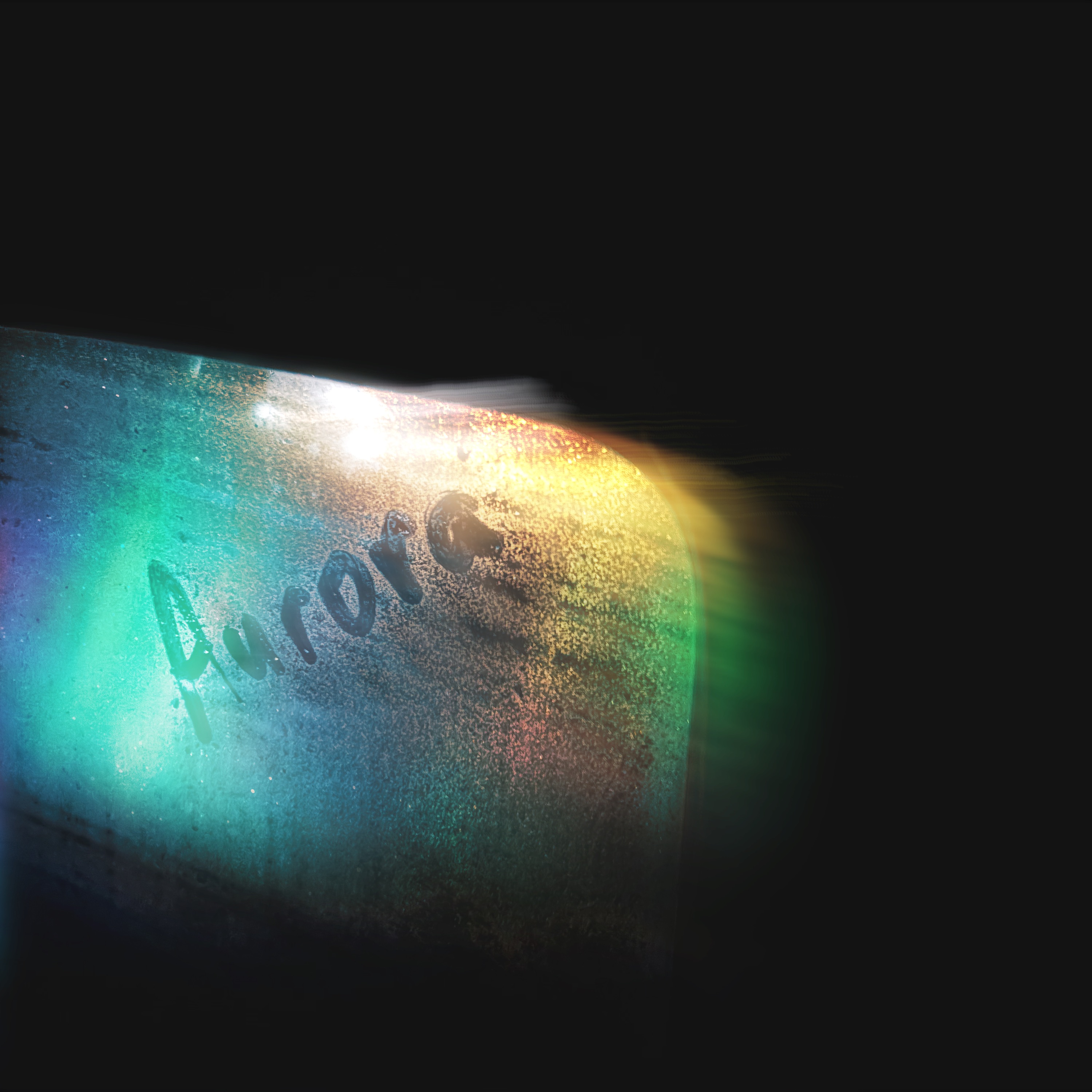
JULIA BELLE — ‘AURORA’
Single Review
The first thing that hits me about Julia Belle isn't the production.
It isn't the songwriting.
It's her voice.
Silky, smooth and immediately accessible, there's something wonderfully familiar about Julia's vocal tone. And when I say familiar, I don't mean predictable. I mean that within a few seconds you can imagine why people would be drawn into her musical world.
Some singers make you work to get inside their songs.
Julia doesn't.
‘Aurora’ is dreamy indie-pop with a cinematic edge, built around longing, nostalgia and the slightly dangerous habit we all have of romanticising people long after they're gone.
The story behind it is rather brilliant.
Julia was listening to Pink Floyd with an old flame when she mentioned the aurora. He told her it didn't exist in this part of the world, and then put on The Dark Side of the Moon. That strange little moment became the starting point for a song about memory, escapism and the way we rewrite people inside our own heads.
That's a great songwriting trigger.
And you can hear the dreaminess in the finished track.
The song is well written, well produced and beautifully suited to Julia's vocal. It also represents an evolution from the folk-pop foundations of her debut Dreamland towards something more layered and cinematic.
But I'm going to be slightly difficult now.
Because I went looking for more.
And that's actually one of the best things I can say about ‘Aurora’.
I didn't just listen to the single and move on.
I went back through Julia's previous releases.
That's a very good sign.
There is a genuine emotional consistency to her songwriting. She wears her heart firmly on her sleeve, and there is a recurring sense of heartbreak, nostalgia, escapism and relationships that haven't necessarily ended neatly. Her earlier catalogue has been described in similar terms, with the combination of intimate songwriting and acoustic textures running through her work.
And one of those songs has now found its way into my liked playlist.
Believe me, that's complimentary.
The one area where I think ‘Aurora’ could have been better served is the video.
The performance-based video has Julia appearing in different situations singing the song, but for me it doesn't quite capture the mysterious, ethereal quality of the track itself.
I wanted more imagination.
More atmosphere.
More Aurora.
The song feels like it should have a visual world of its own, something mysterious, perhaps slightly surreal, something that makes you wonder what you're actually watching.
Instead, the video feels more like a conventional performance piece.
And that's a shame because the song gives a director plenty to work with.
When you've got a track about memory, fantasy, old lovers, Pink Floyd, escapism and the northern lights, you've been handed a pretty decent cinematic toolbox.
I'd have gone much further.
Musically, however, I'm sold.
Verdict: Dreamy, accessible and emotionally honest, with a voice that makes you want to go back and investigate the rest of the catalogue. And when a single does that, it's doing its job.